Danish fish fossil cliffs set to gain UNESCO status / Photo: James BROOKS - AFP

 London
 17 °C
17 °C

 Manchester
16 °C
Manchester
16 °C
 Glasgow
9 °C
Glasgow
9 °C
 Dublin
15 °C
Dublin
15 °C
 Belfast
12 °C
Belfast
12 °C
 Washington
 15 °C
15 °C
 Denver
18 °C
Denver
18 °C
 Atlanta
 23 °C
23 °C
 Dallas
 30 °C
30 °C
 Houston Texas
29 °C
Houston Texas
29 °C
 New Orleans
27 °C
New Orleans
27 °C
 El Paso
19 °C
El Paso
19 °C
 Phoenix
32 °C
Phoenix
32 °C
 Los Angeles
20 °C
San Diego
21 °C
San Francisco
14 °C
Chicago
17 °C
Minneapolis
11 °C
Seattle
15 °C
Portland
Los Angeles
20 °C
San Diego
21 °C
San Francisco
14 °C
Chicago
17 °C
Minneapolis
11 °C
Seattle
15 °C
Portland
 17 °C
Salt Lake City
16 °C
Las Vegas
27 °C
Miami
26 °C
Jacksonville
25 °C
San Antonio
29 °C
Bermuda
28 °C
Nassau
14 °C
Iqaluit
4 °C
Yellowknife
7 °C
Anchorage
8 °C
Fairbanks
4 °C
Barrow
-1 °C
Calgary
12 °C
Edmonton
18 °C
Winnipeg
13 °C
Goose Bay
9 °C
Halifax
13 °C
Boston
11 °C
Ottawa
8 °C
Toronto
12 °C
Detroit
14 °C
Cleveland
15 °C
New York
15 °C
Baltimore
15 °C
Philadelphia
16 °C
Nuuk (Godthåb)
2 °C
Hong Kong
17 °C
Salt Lake City
16 °C
Las Vegas
27 °C
Miami
26 °C
Jacksonville
25 °C
San Antonio
29 °C
Bermuda
28 °C
Nassau
14 °C
Iqaluit
4 °C
Yellowknife
7 °C
Anchorage
8 °C
Fairbanks
4 °C
Barrow
-1 °C
Calgary
12 °C
Edmonton
18 °C
Winnipeg
13 °C
Goose Bay
9 °C
Halifax
13 °C
Boston
11 °C
Ottawa
8 °C
Toronto
12 °C
Detroit
14 °C
Cleveland
15 °C
New York
15 °C
Baltimore
15 °C
Philadelphia
16 °C
Nuuk (Godthåb)
2 °C
Hong Kong
 29 °C
Singapore
29 °C
Singapore
 31 °C
Melbourne
27 °C
Canberra
31 °C
Melbourne
27 °C
Canberra
 20 °C
Adelaide
22 °C
Darwin
31 °C
Perth
20 °C
Adelaide
22 °C
Darwin
31 °C
Perth
 21 °C
Fort Worth
29 °C
Honolulu
27 °C
Sydney
18 °C
Johannesburg
12 °C
Dubai
33 °C
Mumbai
30 °C
Zürich
7 °C
Tokyo
20 °C
Seoul
28 °C
Delhi
31 °C
Beijing
29 °C
Riyadh
33 °C
Prague
8 °C
Pennsylvania
14 °C
Valletta
24 °C
Manama
34 °C
Warsaw
11 °C
Stockholm
6 °C
21 °C
Fort Worth
29 °C
Honolulu
27 °C
Sydney
18 °C
Johannesburg
12 °C
Dubai
33 °C
Mumbai
30 °C
Zürich
7 °C
Tokyo
20 °C
Seoul
28 °C
Delhi
31 °C
Beijing
29 °C
Riyadh
33 °C
Prague
8 °C
Pennsylvania
14 °C
Valletta
24 °C
Manama
34 °C
Warsaw
11 °C
Stockholm
6 °C
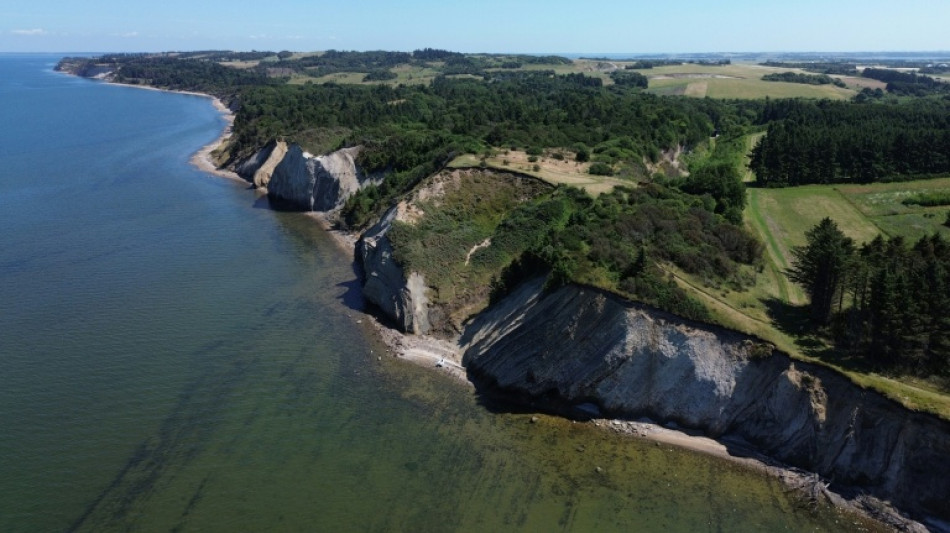
Two Danish coastal cliffs where palaeontologists have uncovered 55-million-year-old fossils of prehistoric wildlife are likely to gain World Heritage status as UNESCO's committee meets in South Korea.
, have for decades been known for what UNESCO terms "exceedingly well-preserved" fossils of early insects, birdlife, and more than 80 different fish species, including ancient relatives of mackerel and herring.
"It's very unique," said Jan Audun Rasmussen, a researcher and curator from Museum Mors, who co-authored the UNESCO bid.
"What we can show in these deposits is the first evolution of many of the fish lineages and bird lineages," he told AFP.
Fifty-five million years ago, all of Denmark was covered by water and Limfjord's low-oxygen clay seafloor provided a perfect time capsule for fish, birds and turtles that died and sank to the seabed.
There was no oxygen for small organisms that would eat the bodies of dead animals, explained Audun Rasmussen, standing below the towering 60-metre-high (200-foot) Hanklit.
"That means that the preservation of the fossils... it's excellent."
The cliffs are already on the UNESCO's tentative list and the International Union for Conservation of Nature (IUCN) has recommended they be included on the World Heritage list.
- Climate change insight -
Beyond providing a glimpse into the distant past, Hanklit and Knudeklint might also offer some lessons on the impact of climate change that is warming our planet.
The cliffs' rock layers capture a dramatic, 56-million-year-old global warming event -- one of the largest climate catastrophes in Earth's history -- when a massive release of greenhouse gases sent global temperatures soaring by between 5 and 8 degrees Celsius.
"Obviously, warming causes a lot of changes in the animals," said Laura Jane Cotton of Denmark's Natural History Museum.
Cotton told AFP the Limfjord cliff fossils -- which include specimens from during and after the event -- provide researchers with an environmental "snapshot" that was the "best analogue for modern warming".
"While we can't say exactly what went extinct when, we can get an idea of it if things disappear from this environment very suddenly," she said.
If listed, the Hanklit and Knudeklint cliffs on the fjord islands of Mors and Fur would become the fifth natural site on Danish soil to receive UNESCO World Heritage status -- including one in the autonomous territory of Greenland.
Discussions on a UNESCO bid began in 2010.
The area is popular with amateur fossil hunters, and the "treasure troves" of Hanklit and Knudeklint have been protected for decades under Danish law.
Thomas Olesen, project leader for the local Skive municipality, believes UNESCO recognition will provide a welcome boost to tourism, particularly on the small island of Fur, home to just 700 residents.
"Hopefully it will have a very positive effect on the local economy," said Olesen, standing atop the 30-metre Knudeklint cliff.
Z.Mertens--BlnAP