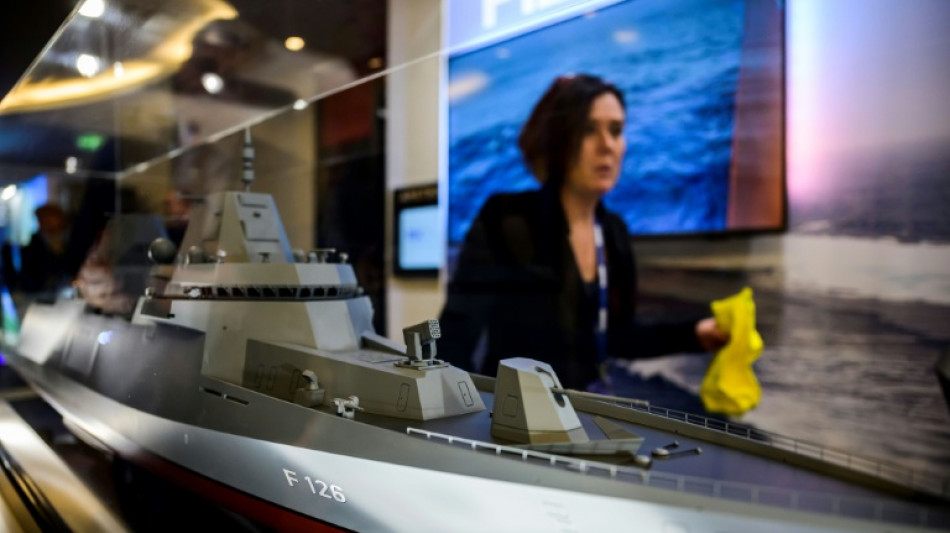
German naval ambitions suffer setback as warship order axed / Photo: John MACDOUGALL - AFP

 London
 16 °C
16 °C

 Manchester
 13 °C
13 °C
 Glasgow
 15 °C
15 °C
 Dublin
14 °C
Dublin
14 °C
 Belfast
 14 °C
14 °C
 Washington
 29 °C
29 °C
 Denver
25 °C
Denver
25 °C
 Atlanta
 33 °C
33 °C
 Dallas
 37 °C
37 °C
 Houston Texas
29 °C
Houston Texas
29 °C
 New Orleans
32 °C
New Orleans
32 °C
 El Paso
32 °C
El Paso
32 °C
 Phoenix
31 °C
Phoenix
31 °C
 Los Angeles
26 °C
San Diego
25 °C
San Francisco
20 °C
Chicago
24 °C
Minneapolis
22 °C
Seattle
23 °C
Portland
28 °C
Salt Lake City
Los Angeles
26 °C
San Diego
25 °C
San Francisco
20 °C
Chicago
24 °C
Minneapolis
22 °C
Seattle
23 °C
Portland
28 °C
Salt Lake City
 28 °C
Las Vegas
33 °C
Miami
28 °C
Jacksonville
29 °C
San Antonio
35 °C
Bermuda
30 °C
Nassau
26 °C
Iqaluit
28 °C
Las Vegas
33 °C
Miami
28 °C
Jacksonville
29 °C
San Antonio
35 °C
Bermuda
30 °C
Nassau
26 °C
Iqaluit
 4 °C
Yellowknife
10 °C
Anchorage
12 °C
Fairbanks
9 °C
Barrow
4 °C
Yellowknife
10 °C
Anchorage
12 °C
Fairbanks
9 °C
Barrow
 -1 °C
Calgary
22 °C
Edmonton
36 °C
Winnipeg
17 °C
Goose Bay
21 °C
Halifax
25 °C
Boston
25 °C
Ottawa
22 °C
Toronto
23 °C
Detroit
20 °C
Cleveland
25 °C
New York
28 °C
Baltimore
28 °C
Philadelphia
28 °C
Nuuk (Godthåb)
6 °C
Hong Kong
27 °C
Singapore
28 °C
Melbourne
29 °C
Canberra
1 °C
Adelaide
9 °C
Darwin
22 °C
Perth
16 °C
Fort Worth
37 °C
Honolulu
28 °C
Sydney
8 °C
Johannesburg
13 °C
Dubai
33 °C
Mumbai
26 °C
Zürich
14 °C
Tokyo
21 °C
Seoul
17 °C
Delhi
27 °C
Beijing
21 °C
Riyadh
32 °C
Prague
13 °C
Pennsylvania
28 °C
Valletta
26 °C
Manama
34 °C
Warsaw
12 °C
Stockholm
12 °C
-1 °C
Calgary
22 °C
Edmonton
36 °C
Winnipeg
17 °C
Goose Bay
21 °C
Halifax
25 °C
Boston
25 °C
Ottawa
22 °C
Toronto
23 °C
Detroit
20 °C
Cleveland
25 °C
New York
28 °C
Baltimore
28 °C
Philadelphia
28 °C
Nuuk (Godthåb)
6 °C
Hong Kong
27 °C
Singapore
28 °C
Melbourne
29 °C
Canberra
1 °C
Adelaide
9 °C
Darwin
22 °C
Perth
16 °C
Fort Worth
37 °C
Honolulu
28 °C
Sydney
8 °C
Johannesburg
13 °C
Dubai
33 °C
Mumbai
26 °C
Zürich
14 °C
Tokyo
21 °C
Seoul
17 °C
Delhi
27 °C
Beijing
21 °C
Riyadh
32 °C
Prague
13 °C
Pennsylvania
28 °C
Valletta
26 °C
Manama
34 °C
Warsaw
12 °C
Stockholm
12 °C
Germany on Wednesday pulled the plug on its largest naval order in decades after the anti-submarine warship project suffered delays, a setback for the country's ambitions to overhaul its military.
The multi-billion-euro project to build six new-generation frigates, set to be the biggest in the German navy, was being abandoned in favour of purchasing eight smaller warships, the defence ministry said.
The ministry said in a statement that it had "decided not to pursue the construction of a total of six frigates of the F126 class any further.
"This is a response to the considerable delays in the project, and the foreseeable cost increases."
The move spells a setback for Europe's top economy at a time it has been rapidly building up its long-neglected armed forces to bolster its role in NATO and deter perceived hostility from Russia.
Anti-submarine warfare has become a key focus for European NATO members following alleged Russian submarine movements near vital undersea cables and pipelines in the Baltic Sea and the Atlantic.
Germany ordered four F126 anti-submarine frigates in 2020 from Dutch group Damen Navel, with the price set at 10 billion euros (then $11.2 billion), with the deal later expanded to include two more vessels.
The first was due to be delivered in 2028, with all due to be operational by 2033, according to the defence ministry.
But the procurement project was beset by repeated delays, that pushed back the frigates expected entry into service.
The Financial Times reported there were myriad problems in the complex procurement process.
Damen struggled with defence ministry demands for submissions to be on paper as well as for documentation to be in German, the paper reported in April, citing industry sources.
- Rheinmetall shares dive -
The F126 contract was widely expected to be transferred to German defence giant Rheinmetall, and its CEO Armin Papperger told reporters last year that the firm was in talks to handle the work.
But the government had concluded that handing over the work to NVL, a shipyard acquired by Rheinmetall in March, would be too costly, the defence ministry said.
Carrying on with the troubled project would have led to an estimated bill of over 18 billion euros, including money already spent as well as 15.2 billion euros for NVL to take it on.
It would have also meant the government forgoing a contractual right to sue Damen Navel for damages, the ministry added.
"This runs counter to the ministry of defence's understanding of the responsible management of budgetary funds," it said.
"The amount of these damages is currently being determined as part of the legal review."
News that the F126 order would be scrapped sent Rheinmetall shares down about 17 percent on Wednesday, marking their largest intra-day fall in over a year.
Berlin will instead order eight smaller ships from rival German contractor TKMS, the defence ministry said, adding it would seek approval from parliament's budget committee "as quickly as possible".
Under the plan, the government will pay 6.3 billion euros for four MEKO A-2000 frigates with an option to purchase another four for about 5.3 billion euros.
TKMS shares were up 9.2 percent following the news.
The saga throws a spotlight on the challenges for Germany's massive military build up.
Berlin has earmarked hundreds of billions of euros for rearmament over the coming decade, exempting most defence spending from strict constitutional borrowing limits.
But some have warned that the government needs to speed up complex procurement processes to make sure the money is wisely spent.
V.Kranz--BlnAP