Trump announces tariffs of up to 100% on imported drones / Photo: Hector RETAMAL - AFP/File

 London
 17 °C
17 °C
 Manchester
14 °C
Manchester
14 °C
 Glasgow
15 °C
Glasgow
15 °C
 Dublin
13 °C
Dublin
13 °C
 Belfast
 13 °C
13 °C
 Washington
18 °C
Washington
18 °C
 Denver
17 °C
Denver
17 °C
 Atlanta
 18 °C
18 °C
 Dallas
28 °C
Dallas
28 °C
 Houston Texas
27 °C
Houston Texas
27 °C
 New Orleans
26 °C
New Orleans
26 °C
 El Paso
 19 °C
19 °C
 Phoenix
22 °C
Phoenix
22 °C
 Los Angeles
21 °C
San Diego
20 °C
San Francisco
14 °C
Chicago
16 °C
Minneapolis
17 °C
Seattle
16 °C
Portland
16 °C
Salt Lake City
14 °C
Las Vegas
21 °C
Miami
25 °C
Jacksonville
Los Angeles
21 °C
San Diego
20 °C
San Francisco
14 °C
Chicago
16 °C
Minneapolis
17 °C
Seattle
16 °C
Portland
16 °C
Salt Lake City
14 °C
Las Vegas
21 °C
Miami
25 °C
Jacksonville
 23 °C
San Antonio
27 °C
Bermuda
27 °C
Nassau
15 °C
Iqaluit
23 °C
San Antonio
27 °C
Bermuda
27 °C
Nassau
15 °C
Iqaluit
 2 °C
Yellowknife
4 °C
Anchorage
7 °C
Fairbanks
5 °C
Barrow
-1 °C
Calgary
12 °C
Edmonton
13 °C
Winnipeg
14 °C
Goose Bay
12 °C
Halifax
14 °C
Boston
13 °C
Ottawa
13 °C
Toronto
17 °C
Detroit
14 °C
Cleveland
13 °C
New York
16 °C
Baltimore
18 °C
Philadelphia
17 °C
Nuuk (Godthåb)
1 °C
Hong Kong
2 °C
Yellowknife
4 °C
Anchorage
7 °C
Fairbanks
5 °C
Barrow
-1 °C
Calgary
12 °C
Edmonton
13 °C
Winnipeg
14 °C
Goose Bay
12 °C
Halifax
14 °C
Boston
13 °C
Ottawa
13 °C
Toronto
17 °C
Detroit
14 °C
Cleveland
13 °C
New York
16 °C
Baltimore
18 °C
Philadelphia
17 °C
Nuuk (Godthåb)
1 °C
Hong Kong
 32 °C
Singapore
32 °C
Singapore
 32 °C
Melbourne
25 °C
Canberra
32 °C
Melbourne
25 °C
Canberra
 19 °C
Adelaide
30 °C
Darwin
31 °C
Perth
18 °C
Fort Worth
29 °C
Honolulu
26 °C
Sydney
21 °C
Johannesburg
12 °C
Dubai
34 °C
Mumbai
31 °C
Zürich
14 °C
Tokyo
19 °C
Adelaide
30 °C
Darwin
31 °C
Perth
18 °C
Fort Worth
29 °C
Honolulu
26 °C
Sydney
21 °C
Johannesburg
12 °C
Dubai
34 °C
Mumbai
31 °C
Zürich
14 °C
Tokyo
 20 °C
Seoul
26 °C
Delhi
27 °C
Beijing
25 °C
Riyadh
31 °C
Prague
9 °C
Pennsylvania
17 °C
Valletta
23 °C
Manama
33 °C
Warsaw
9 °C
Stockholm
13 °C
20 °C
Seoul
26 °C
Delhi
27 °C
Beijing
25 °C
Riyadh
31 °C
Prague
9 °C
Pennsylvania
17 °C
Valletta
23 °C
Manama
33 °C
Warsaw
9 °C
Stockholm
13 °C
President Donald Trump announced on Thursday tariffs of up to 100 percent on imports of unmanned drones and their components to reduce US reliance on imports in an industry dominated by China.
The US president justified the decision on national security grounds, according to a White House statement that detailed a 100 percent duty rate on the import of certain unmanned aircraft systems (UAS), as they are formally known.
Those with a takeoff weight of more than 25 kilograms and with so-called national security capabilities such as thermal cameras and docking stations will be tariffed at 100 percent.
Smaller drones face a 25 percent tariff.
The statement said the tariffs will "encourage increased domestic production" of drones and their components and reduce reliance on foreign supply chains.
Most of the new tariffs are to take effect September 3.
"The tariffs are really targeting industrial and commercial drones, and to a lesser degree smaller drones used by hobbyists," Clayton Swope, a senior fellow at the Center for Strategic and International Studies, told AFP.
- Dual use -
In December 2025, the US Federal Communications Commission (FCC) -- which is charged with regulating telecommunications nationally -- argued that domestic production of drones would "reduce the risk of direct UAS attacks and disruptions, unauthorized surveillance, sensitive data exfiltration, and other UAS threats to the homeland."
It added that drones "are inherently dual-use: they are both commercial platforms and potentially military or paramilitary sensors and weapons," and foreign production of drones and their components, "could enable persistent surveillance, data exfiltration, and destructive operations over US territory."
The war in Ukraine has underscored how commercial and hobbyist drones can be outfitted for frontline attacks.
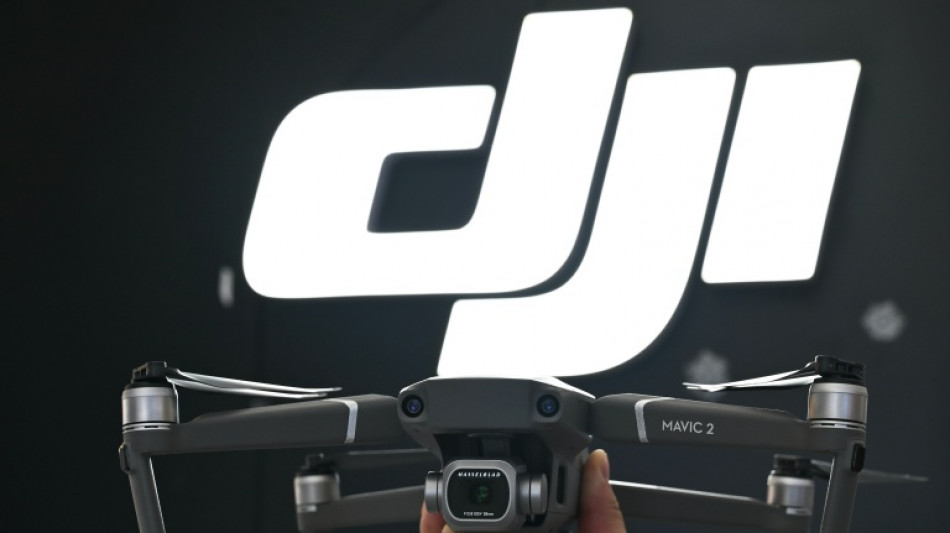
The Chinese company DJI, founded in 2006, has captured more than two-thirds of the global drone market in recent years, according to several studies.
It has also been in Washington's crosshairs for several years, with US officials accusing it of supplying products used to surveil ethnic minorities in China, particularly the Uyghurs.
Since 2022, DJI has been on a US list of Chinese companies linked to the country's military and therefore subject to restrictions on access to US technology.
DJI fought its inclusion on the list in 2024, insisting that it was not owned or controlled by the military.
It is "critical that America be able to produce its own unmanned capabilities without parts or even raw materials from China," Joshua Steinman, a supply chain expert formerly on the Trump administration's National Security Council, told AFP.
Last week, China announced restrictions on drone exports to the United States and blacklisted six companies in response to trade sanctions imposed by Washington over forced labor and national security concerns.
That move came days after the US imposed fresh tariffs on China and 59 countries.
In late July 2026, the US government also added humanoid and quadruped robots to a blacklist of products and companies barred from import into the United States, saying they posed critical national security risks.
That sector, too, is dominated by Chinese industry.
F.Lang--BlnAP