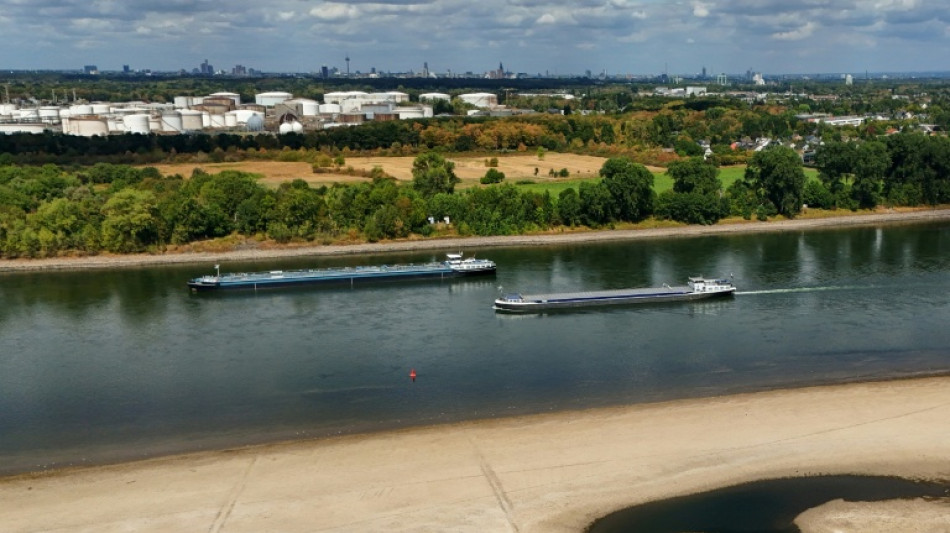
Parts of Germany's Rhine could become unnavigable, group warns / Photo: Ina FASSBENDER - AFP

 London
 21 °C
21 °C

 Manchester
20 °C
Manchester
20 °C
 Glasgow
 19 °C
19 °C
 Dublin
 18 °C
18 °C
 Belfast
18 °C
Belfast
18 °C
 Washington
22 °C
Washington
22 °C
 Denver
21 °C
Denver
21 °C
 Atlanta
 26 °C
26 °C
 Dallas
34 °C
Dallas
34 °C
 Houston Texas
30 °C
Houston Texas
30 °C
 New Orleans
30 °C
New Orleans
30 °C
 El Paso
 21 °C
21 °C
 Phoenix
 28 °C
28 °C
 Los Angeles
30 °C
San Diego
25 °C
San Francisco
22 °C
Chicago
23 °C
Minneapolis
17 °C
Seattle
16 °C
Portland
21 °C
Salt Lake City
23 °C
Las Vegas
27 °C
Miami
26 °C
Jacksonville
28 °C
San Antonio
34 °C
Bermuda
Los Angeles
30 °C
San Diego
25 °C
San Francisco
22 °C
Chicago
23 °C
Minneapolis
17 °C
Seattle
16 °C
Portland
21 °C
Salt Lake City
23 °C
Las Vegas
27 °C
Miami
26 °C
Jacksonville
28 °C
San Antonio
34 °C
Bermuda
 28 °C
Nassau
19 °C
Iqaluit
3 °C
Yellowknife
7 °C
Anchorage
11 °C
Fairbanks
3 °C
Barrow
-2 °C
Calgary
17 °C
Edmonton
26 °C
Winnipeg
22 °C
Goose Bay
28 °C
Nassau
19 °C
Iqaluit
3 °C
Yellowknife
7 °C
Anchorage
11 °C
Fairbanks
3 °C
Barrow
-2 °C
Calgary
17 °C
Edmonton
26 °C
Winnipeg
22 °C
Goose Bay
 13 °C
Halifax
16 °C
Boston
18 °C
Ottawa
15 °C
Toronto
20 °C
Detroit
13 °C
Halifax
16 °C
Boston
18 °C
Ottawa
15 °C
Toronto
20 °C
Detroit
 22 °C
Cleveland
21 °C
New York
19 °C
Baltimore
21 °C
Philadelphia
21 °C
Nuuk (Godthåb)
1 °C
Hong Kong
29 °C
Singapore
27 °C
Melbourne
28 °C
Canberra
13 °C
Adelaide
19 °C
Darwin
27 °C
Perth
14 °C
Fort Worth
33 °C
Honolulu
31 °C
Sydney
19 °C
Johannesburg
9 °C
Dubai
31 °C
Mumbai
25 °C
Zürich
16 °C
Tokyo
18 °C
Seoul
16 °C
Delhi
24 °C
Beijing
15 °C
Riyadh
30 °C
Prague
14 °C
Pennsylvania
20 °C
Valletta
23 °C
Manama
33 °C
Warsaw
12 °C
Stockholm
10 °C
22 °C
Cleveland
21 °C
New York
19 °C
Baltimore
21 °C
Philadelphia
21 °C
Nuuk (Godthåb)
1 °C
Hong Kong
29 °C
Singapore
27 °C
Melbourne
28 °C
Canberra
13 °C
Adelaide
19 °C
Darwin
27 °C
Perth
14 °C
Fort Worth
33 °C
Honolulu
31 °C
Sydney
19 °C
Johannesburg
9 °C
Dubai
31 °C
Mumbai
25 °C
Zürich
16 °C
Tokyo
18 °C
Seoul
16 °C
Delhi
24 °C
Beijing
15 °C
Riyadh
30 °C
Prague
14 °C
Pennsylvania
20 °C
Valletta
23 °C
Manama
33 °C
Warsaw
12 °C
Stockholm
10 °C
Parts of the Rhine river in Germany could soon become unnavigable as water levels drop further due to soaring summer temperatures and low rainfall, an industry group warned Monday.
Levels have been at record lows since the end of July as Germany, like elsewhere in Europe, struggles through a series of heatwaves.
Cargo ships have managed to continue transporting goods along the waterway, which flows through the industrial heartland of Europe's top economy, albeit with reduced loads and at higher costs.
But the BDB association of inland shipping warned the water level at the town of Kaub -- used as a reference point for vessels plying the waterway -- is expected to fall even further this week.
"With water levels this low, commercial shipping will no longer be able to transport goods in the region," the group's managing director Jens Schwanen told the Rheinische Post newspaper.
"In principle, this means the Rhine is no longer continuously navigable and thus divided in two."
There would still be shipping on the river in the Netherlands and in Germany up to around Cologne, and further south on several tributaries, he said.
But water levels along much of the Rhine in Germany would be too low for vessels to pass.
A spokeswoman for the WSV agency responsible for managing German waterways told AFP that "water levels are expected to continue to fall slightly over the coming days".
There are no bans on shipping, however, she added, and it was up to the individual captains to decide how to adjust their cargoes to adapt to the lower waters.
Asked about the BDB's warning, a transport ministry spokesman said that the government was "monitoring very closely whether the situation will turn out as described in that scenario".
The Rhine originates in the Swiss Alps, flows through and along the borders of several countries, and empties into the North Sea in the Netherlands.
Problems on the Rhine have already prompted some German companies, including steelmaker Thyssenkrupp and chemical giant BASF, to use shallow-draft ships to continue transporting raw materials and finished products.
A halt to shipping on parts of the key economic artery would deal yet another blow to Germany's economy, already battling problems ranging from the Iran war energy surge and US tariffs.
Chancellor Friedrich Merz's government is weighing help for companies who transport goods via the river, including the chemical and oil sectors, and has agreed with some states to temporarily lift a ban on trucks driving on Sundays and public holidays.
C.W.Kuhn--BlnAP