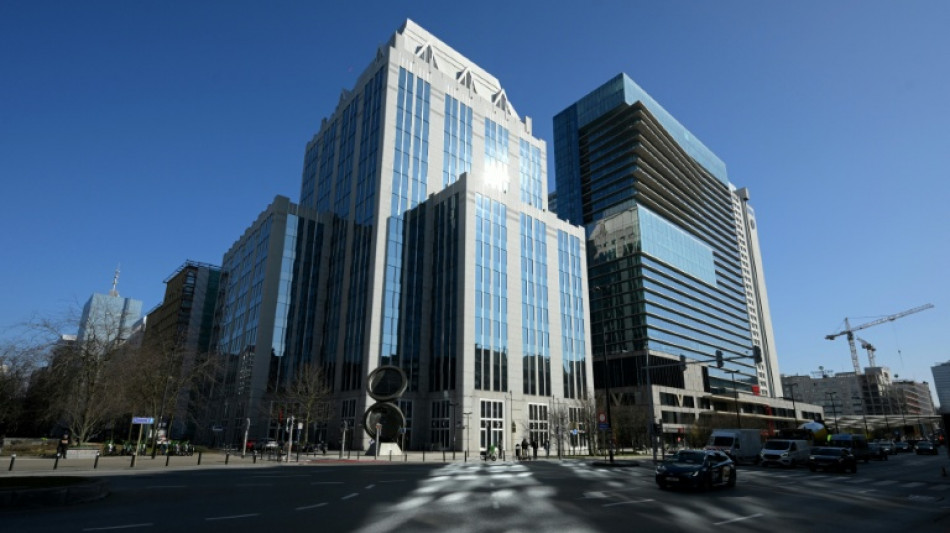
Euroclear details 'concerns' over EU's frozen Russian asset plan / Photo: Nicolas TUCAT - AFP

 London
 33 °C
33 °C

 Manchester
26 °C
Manchester
26 °C
 Glasgow
 33 °C
33 °C
 Dublin
21 °C
Dublin
21 °C
 Belfast
20 °C
Belfast
20 °C
 Washington
26 °C
Washington
26 °C
 Denver
 17 °C
17 °C
 Atlanta
26 °C
Atlanta
26 °C
 Dallas
27 °C
Dallas
27 °C
 Houston Texas
27 °C
Houston Texas
27 °C
 New Orleans
27 °C
New Orleans
27 °C
 El Paso
23 °C
El Paso
23 °C
 Phoenix
28 °C
Phoenix
28 °C
 Los Angeles
21 °C
San Diego
21 °C
San Francisco
15 °C
Chicago
23 °C
Minneapolis
Los Angeles
21 °C
San Diego
21 °C
San Francisco
15 °C
Chicago
23 °C
Minneapolis
 20 °C
Seattle
15 °C
Portland
20 °C
Seattle
15 °C
Portland
 16 °C
Salt Lake City
16 °C
Las Vegas
27 °C
Miami
29 °C
Jacksonville
26 °C
San Antonio
26 °C
Bermuda
29 °C
Nassau
24 °C
Iqaluit
3 °C
Yellowknife
13 °C
Anchorage
13 °C
Fairbanks
17 °C
Barrow
7 °C
Calgary
10 °C
Edmonton
25 °C
Winnipeg
15 °C
Goose Bay
19 °C
Halifax
22 °C
Boston
22 °C
Ottawa
19 °C
Toronto
21 °C
Detroit
22 °C
Cleveland
22 °C
New York
25 °C
Baltimore
26 °C
Philadelphia
25 °C
Nuuk (Godthåb)
16 °C
Salt Lake City
16 °C
Las Vegas
27 °C
Miami
29 °C
Jacksonville
26 °C
San Antonio
26 °C
Bermuda
29 °C
Nassau
24 °C
Iqaluit
3 °C
Yellowknife
13 °C
Anchorage
13 °C
Fairbanks
17 °C
Barrow
7 °C
Calgary
10 °C
Edmonton
25 °C
Winnipeg
15 °C
Goose Bay
19 °C
Halifax
22 °C
Boston
22 °C
Ottawa
19 °C
Toronto
21 °C
Detroit
22 °C
Cleveland
22 °C
New York
25 °C
Baltimore
26 °C
Philadelphia
25 °C
Nuuk (Godthåb)
 7 °C
Hong Kong
28 °C
Singapore
31 °C
Melbourne
27 °C
Canberra
7 °C
Hong Kong
28 °C
Singapore
31 °C
Melbourne
27 °C
Canberra
 3 °C
Adelaide
10 °C
Darwin
26 °C
Perth
16 °C
Fort Worth
26 °C
Honolulu
3 °C
Adelaide
10 °C
Darwin
26 °C
Perth
16 °C
Fort Worth
26 °C
Honolulu
 25 °C
Sydney
11 °C
Johannesburg
16 °C
Dubai
38 °C
Mumbai
29 °C
Zürich
35 °C
Tokyo
26 °C
Seoul
28 °C
Delhi
28 °C
Beijing
26 °C
Riyadh
45 °C
Prague
29 °C
Pennsylvania
23 °C
Valletta
33 °C
Manama
41 °C
Warsaw
26 °C
Stockholm
26 °C
25 °C
Sydney
11 °C
Johannesburg
16 °C
Dubai
38 °C
Mumbai
29 °C
Zürich
35 °C
Tokyo
26 °C
Seoul
28 °C
Delhi
28 °C
Beijing
26 °C
Riyadh
45 °C
Prague
29 °C
Pennsylvania
23 °C
Valletta
33 °C
Manama
41 °C
Warsaw
26 °C
Stockholm
26 °C
EU reassurances over its plan to use frozen Russian assets to help fund Ukraine have failed to quell worries about the untested scheme, the organisation holding most of the funds told AFP.
"We've made very, very clear that we still have concerns," Guillaume Eliet, chief risk officer at Brussels-based clearing house Euroclear, told AFP in an interview.
The European Commission is pushing to tap some 200 billion euros ($232 billion) of Russian central bank assets immobilised in the bloc to provide a desperately needed loan for Kyiv.
Officials are desperate to get agreement on an initial 90 billion euros to prop up Ukraine's finances at an EU leaders' summit on December 18.
But the complex plan -- under which Euroclear loans the money to the European Union, which in turn loans it to Kyiv -- faces resistance from Belgium over fears of potential financial and legal reprisals from Moscow.
The EU's executive has insisted it would put a "three-tier defence" in place that would mean there is "no scenario" under which Euroclear would not be able to get the money to repay Russia if needed.
Under that system the EU says member states can provide guarantees that they will help cover any liabilities.
But Eliet said Euroclear -- a key cog in Europe's financial machinery processing equities, bonds, derivative and investment fund transfers -- still needs convincing that those promises mean it could get the funds immediately if required.
"We need to make sure that in a very short timeframe we can access the liquidity," he said in the interview Monday.
"How can we be reassured that if we need the money on Monday morning we can call out these guarantees?"
Euroclear still holds some 16 billion euros of client assets in Russia that it worries Moscow could seize in retribution -- and it would have to compensate.
While guarantees from EU states were a positive step, Eliet insisted it was unclear how binding they would be if there were political changes in those countries.
"Are we sure that in 10 years down the road we would still be protected?" he said.
- 'Doable' -
A further concern is that the move could be seen as confiscating Russian assets, something the commission insists is not the case.
The company -- which has over 40 trillion euros under custody -- also frets that it would knock confidence in the broader eurozone economy.
"The setup as it's presented today may still be considered, especially by international investors, a signal that maybe Europe is not a safe place to invest in," Eliet said.
As the clock ticks down to the crunch EU summit next week, Eliet said finding a solution was possible, but lawyers needed to "sit down around the table" and hammer out a plan to "reduce or avoid the risks".
"We are happy to sit around the table as well to produce the best framework possible within the short timeframe we have -- it is doable."
In a bid to spread the risk around, Belgium has called on the EU to look to use some 25 billion euros in Russian assets held outside Euroclear.
The commission has said it wants to do that, but EU countries where the funds are stashed have not come forward.
"What we understand is that the preference of the EU would be to go to Euroclear first," Eliet said.
As Russia ratchets up warnings over the plan, Euroclear has stepped up its security measures and is "monitoring the level of threats on a daily basis".
"We are putting in place everything we can to protect our people," Eliet said.
With other EU states including powerhouse Germany pushing hard for the plan, Belgium's fierce objections could be overridden.
There appears little appetite for a fallback plan for the EU to raise the loan itself, which Euroclear still prefers.
European Commission president Ursula von der Leyen has said the loan scheme only needs a weighted majority of countries -- a step Euroclear says would be unwise.
"It is really in the interest of Europe that the member states go together for a solution," Eliet said.
Z.Mertens--BlnAP