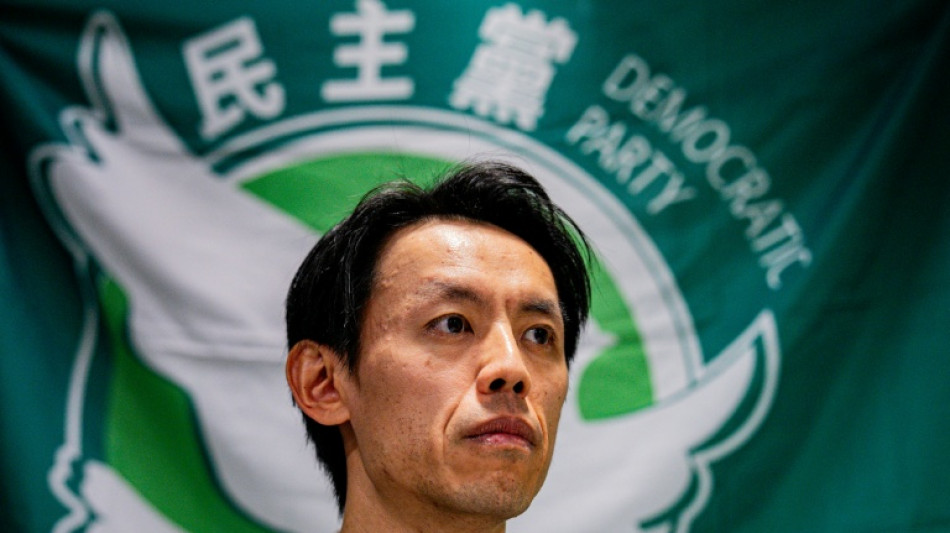
Hong Kong's oldest pro-democracy party announces dissolution / Photo: Leung Man Hei - AFP

 London
 25 °C
25 °C

 Manchester
 21 °C
21 °C
 Glasgow
22 °C
Glasgow
22 °C
 Dublin
19 °C
Dublin
19 °C
 Belfast
17 °C
Belfast
17 °C
 Washington
25 °C
Washington
25 °C
 Denver
18 °C
Denver
18 °C
 Atlanta
 26 °C
26 °C
 Dallas
 30 °C
30 °C
 Houston Texas
28 °C
Houston Texas
28 °C
 New Orleans
27 °C
New Orleans
27 °C
 El Paso
 26 °C
26 °C
 Phoenix
29 °C
Phoenix
29 °C
 Los Angeles
20 °C
San Diego
21 °C
San Francisco
15 °C
Chicago
Los Angeles
20 °C
San Diego
21 °C
San Francisco
15 °C
Chicago
 22 °C
Minneapolis
20 °C
Seattle
17 °C
Portland
19 °C
Salt Lake City
18 °C
Las Vegas
29 °C
Miami
28 °C
Jacksonville
25 °C
San Antonio
27 °C
Bermuda
28 °C
Nassau
22 °C
Iqaluit
4 °C
Yellowknife
13 °C
Anchorage
15 °C
Fairbanks
19 °C
Barrow
7 °C
Calgary
10 °C
Edmonton
25 °C
Winnipeg
16 °C
Goose Bay
18 °C
Halifax
17 °C
Boston
19 °C
Ottawa
16 °C
Toronto
18 °C
Detroit
22 °C
Cleveland
20 °C
New York
24 °C
Baltimore
24 °C
Philadelphia
23 °C
Nuuk (Godthåb)
22 °C
Minneapolis
20 °C
Seattle
17 °C
Portland
19 °C
Salt Lake City
18 °C
Las Vegas
29 °C
Miami
28 °C
Jacksonville
25 °C
San Antonio
27 °C
Bermuda
28 °C
Nassau
22 °C
Iqaluit
4 °C
Yellowknife
13 °C
Anchorage
15 °C
Fairbanks
19 °C
Barrow
7 °C
Calgary
10 °C
Edmonton
25 °C
Winnipeg
16 °C
Goose Bay
18 °C
Halifax
17 °C
Boston
19 °C
Ottawa
16 °C
Toronto
18 °C
Detroit
22 °C
Cleveland
20 °C
New York
24 °C
Baltimore
24 °C
Philadelphia
23 °C
Nuuk (Godthåb)
 8 °C
Hong Kong
28 °C
Singapore
34 °C
Melbourne
27 °C
Canberra
9 °C
Adelaide
15 °C
Darwin
8 °C
Hong Kong
28 °C
Singapore
34 °C
Melbourne
27 °C
Canberra
9 °C
Adelaide
15 °C
Darwin
 31 °C
Perth
31 °C
Perth
 21 °C
Fort Worth
29 °C
Honolulu
25 °C
Sydney
15 °C
Johannesburg
9 °C
Dubai
44 °C
Mumbai
31 °C
Zürich
25 °C
Tokyo
29 °C
Seoul
31 °C
Delhi
34 °C
Beijing
31 °C
Riyadh
43 °C
Prague
24 °C
Pennsylvania
22 °C
Valletta
31 °C
Manama
42 °C
Warsaw
23 °C
Stockholm
21 °C
21 °C
Fort Worth
29 °C
Honolulu
25 °C
Sydney
15 °C
Johannesburg
9 °C
Dubai
44 °C
Mumbai
31 °C
Zürich
25 °C
Tokyo
29 °C
Seoul
31 °C
Delhi
34 °C
Beijing
31 °C
Riyadh
43 °C
Prague
24 °C
Pennsylvania
22 °C
Valletta
31 °C
Manama
42 °C
Warsaw
23 °C
Stockholm
21 °C
Hong Kong's oldest pro-democracy party has decided to disband, the group announced Sunday, after its members formally voted to dissolve the organisation and enter liquidation.
The Democratic Party was founded in 1994, near the end of British colonial rule, when Hong Kong's leading liberal groups merged.
"Over these thirty years, we have taken part in and borne witness to the development and transformation of Hong Kong society, watching its systems and environment undergo one profound change after another," the party said in a statement.
"Yet as the times have shifted, we now, with deep regret, must bring this chapter to a close," it added.
At Sunday's meeting, 117 out of 121 members voted to the group's liquidation, with the remaining four votes being blank ballots, Lo Kin-hei, the party's chair, told a news conference.
He said that it was a "collective decision" made by party members, adding that it is the best way forward for them.
"We are deeply grateful to all the citizens who have walked with the Democratic Party for the past 30 years," Lo said.
The party's end should spur the public to ask hard questions, Emily Lau, former chair of the party, told AFP earlier this year.
"I don't understand why the Democratic Party would end up like this," former party leader Emily Lau said to reporters when leaving the meeting Sunday.
"I think Beijing needs to provide an explanation," she said.
Lo said the disbandment was due to Hong Kong's "political environment" but declined to provide details of the constraints the party was facing.
- 'Regression' -
The Democratic Party's top concern was determining how the city would eventually elect its own leader and lawmakers through universal suffrage under China's "One Country, Two Systems" model.
It said in its manifesto that "as part of the Chinese citizenry, we have the rights and obligations to participate in and comment on the affairs of China".
Following Hong Kong's handover to China in 1997, the party became the most influential voice of opposition in the city's legislature and led peaceful street demonstrations.
The disbandment decision indicated the regression of Hong Kong from being a liberal society into an authoritarian society, said Yeung Sum, a former party leader who has served jail time.
The 78-year-old added that younger generations would feel frustrated if the political system went "backwards".
"I think this kind of fighting for democracy will carry on, even though we got ourselves disbanded today," Yeung said. "We won't die away. We won't fade away."
Beijing tightened its grip on the Chinese finance hub after massive and sometimes violent pro-democracy protests in 2019.
After the imposition of the national security law, the city's political opposition dwindled, with most democracy campaigners jailed or overseas.
The party holds no elected seats after its lawmakers resigned en masse from the Legislative Council in 2020.
Four party lawmakers were jailed last year for subversion under a Beijing-imposed national security law.
Former party leader Albert Ho is behind bars pending trial for national security charges that could see him jailed for life.
Hong Kong's second-largest opposition group, the Civic Party, closed its doors in 2023.
Another party, the League of Social Democrats, announced its disbandment in June this year, citing "immense political pressure".
"The Hong Kong government should be more open, they should accept more different kinds of opinions, even though there may be some opposition," Lo said on Sunday.
"But that is how the society works and that is how things progress," he added.
L.Ziegler--BlnAP