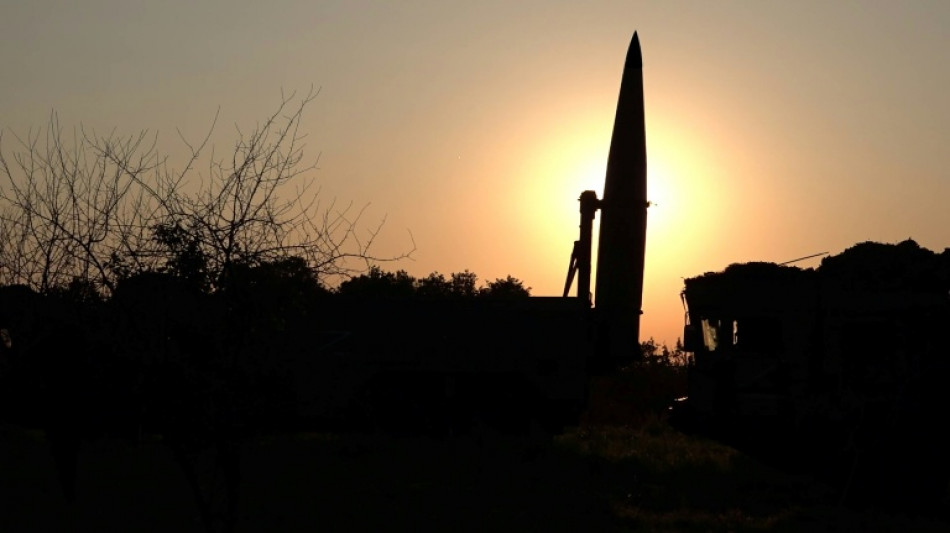
Russia vows to act 'responsibly' as nuclear pact ends with US / Photo: Handout - Russian Defence Ministry/AFP

 London
 15 °C
15 °C
 Manchester
12 °C
Manchester
12 °C
 Glasgow
18 °C
Glasgow
18 °C
 Dublin
12 °C
Dublin
12 °C
 Belfast
12 °C
Belfast
12 °C
 Washington
17 °C
Washington
17 °C
 Denver
18 °C
Denver
18 °C
 Atlanta
 14 °C
14 °C
 Dallas
 27 °C
27 °C
 Houston Texas
27 °C
Houston Texas
27 °C
 New Orleans
24 °C
New Orleans
24 °C
 El Paso
24 °C
El Paso
24 °C
 Phoenix
28 °C
Phoenix
28 °C
 Los Angeles
21 °C
San Diego
22 °C
San Francisco
13 °C
Chicago
12 °C
Minneapolis
13 °C
Seattle
Los Angeles
21 °C
San Diego
22 °C
San Francisco
13 °C
Chicago
12 °C
Minneapolis
13 °C
Seattle
 9 °C
Portland
11 °C
Salt Lake City
21 °C
Las Vegas
26 °C
Miami
9 °C
Portland
11 °C
Salt Lake City
21 °C
Las Vegas
26 °C
Miami
 24 °C
Jacksonville
19 °C
San Antonio
25 °C
Bermuda
27 °C
Nassau
15 °C
Iqaluit
3 °C
Yellowknife
0 °C
Anchorage
6 °C
Fairbanks
3 °C
Barrow
-1 °C
Calgary
3 °C
Edmonton
9 °C
Winnipeg
8 °C
Goose Bay
13 °C
Halifax
14 °C
Boston
13 °C
Ottawa
15 °C
Toronto
16 °C
Detroit
13 °C
Cleveland
13 °C
New York
15 °C
Baltimore
16 °C
Philadelphia
15 °C
Nuuk (Godthåb)
1 °C
Hong Kong
24 °C
Jacksonville
19 °C
San Antonio
25 °C
Bermuda
27 °C
Nassau
15 °C
Iqaluit
3 °C
Yellowknife
0 °C
Anchorage
6 °C
Fairbanks
3 °C
Barrow
-1 °C
Calgary
3 °C
Edmonton
9 °C
Winnipeg
8 °C
Goose Bay
13 °C
Halifax
14 °C
Boston
13 °C
Ottawa
15 °C
Toronto
16 °C
Detroit
13 °C
Cleveland
13 °C
New York
15 °C
Baltimore
16 °C
Philadelphia
15 °C
Nuuk (Godthåb)
1 °C
Hong Kong
 30 °C
Singapore
30 °C
Melbourne
21 °C
Canberra
12 °C
Adelaide
23 °C
Darwin
30 °C
Singapore
30 °C
Melbourne
21 °C
Canberra
12 °C
Adelaide
23 °C
Darwin
 30 °C
Perth
18 °C
Fort Worth
25 °C
Honolulu
26 °C
Sydney
16 °C
Johannesburg
24 °C
Dubai
40 °C
Mumbai
30 °C
Perth
18 °C
Fort Worth
25 °C
Honolulu
26 °C
Sydney
16 °C
Johannesburg
24 °C
Dubai
40 °C
Mumbai
 31 °C
Zürich
20 °C
Tokyo
23 °C
Seoul
22 °C
Delhi
27 °C
Beijing
25 °C
Riyadh
41 °C
Prague
17 °C
Pennsylvania
16 °C
Valletta
31 °C
Zürich
20 °C
Tokyo
23 °C
Seoul
22 °C
Delhi
27 °C
Beijing
25 °C
Riyadh
41 °C
Prague
17 °C
Pennsylvania
16 °C
Valletta
 20 °C
Manama
38 °C
Warsaw
18 °C
Stockholm
16 °C
20 °C
Manama
38 °C
Warsaw
18 °C
Stockholm
16 °C
Russia vowed Wednesday to act "responsibly" hours before its last nuclear treaty with the United States was set to expire, as fears mounted that the agreement's collapse could spur a new arms race.
The New START agreement, which limits the number of nuclear warheads each side can deploy, will end Thursday, formally releasing both Moscow and Washington from a raft of restrictions on their nuclear arsenals.
In a call with Chinese President Xi Jinping on Wednesday, Russian President Vladimir Putin said his country would "act in a measured manner and responsibly" should the treaty expire, Kremlin aide Yuri Ushakov said.
Putin offered in September to keep abiding by the warhead limits in the treaty for a year, but received no formal response from Washington, Ushakov said.
US President Donald Trump said at the time it sounded "like a good idea" but there were no subsequent negotiations.
Moscow remains "open to finding ways for dialogue and ensuring strategic stability", Ushakov added in a briefing to journalists, including from AFP.
- US wants to include China -
Secretary of State Marco Rubio, asked about the end of New START, appeared in no hurry to extend it, saying only that Trump would address the issue later.
"The president's been clear in the past that in order to have true arms control in the 21st century, it's impossible to do something that doesn't include China, because of their vast and rapidly growing stockpile," Rubio said.
China's nuclear arsenal is growing quickly but still well below the levels of Russia and the United States.
Trump in his first term also looked ready to let New START lapse as he insisted on including China.
Joe Biden agreed with Russia to extend New START for five years after he defeated Trump in the 2020 election, but tensions between the two countries later deteriorated over Moscow's offensive in Ukraine.
The treaty, signed in 2010 by then-Russian president Dmitry Medvedev and his US counterpart Barack Obama, limited each side's nuclear arsenal to 1,550 deployed strategic warheads, a reduction of nearly 30 percent from the previous limit set in 2002.
It also allowed both sides to carry out on-site inspections of the other's nuclear arsenal, although these were suspended during the Covid-19 pandemic and have not resumed since.
Russia froze its participation in the agreement in 2023, but said it was continuing to voluntarily adhere to the warhead limits.
- Appeal from pope -
Pope Leo XIV said Wednesday that each side needed to do "everything possible" to avert a new arms race.
"I urge you not to abandon this instrument without seeking to ensure that it is followed up in a concrete and effective manner," the American-born pope said at his weekly general audience.
The International Campaign to Abolish Nuclear Weapons called on Russia and the United States to commit to honour the New START limits while a new agreement was negotiated.
"Without New START, there is a real danger the new arms race will accelerate between the US and Russia -- more warheads, more delivery systems, more exercises -- and other nuclear-armed states will feel pressure to keep up," said Melissa Parke, the Nobel Peace Prize-winning group's executive director.
The Bulletin of the Atomic Scientists last month set its flagship "Doomsday Clock" closer than ever to midnight amid fears the agreement's expiry could start an arms race.
- Germany blames Russia -
A German foreign ministry spokesman blamed Russia for the lapse.
"We can only regret this, but it is consistent with behaviour that Russia has been displaying for several years," the spokesman told journalists Wednesday.
Russia and the United States together control more than 80 percent of the world's nuclear warheads but arms agreements have been withering away.
In 2019, the two countries withdrew from the landmark Intermediate-Range Nuclear Forces (INF) treaty, which limited the use of medium-range missiles.
In 2023, Putin signed a law revoking Russia's ratification of the Comprehensive Nuclear Test Ban Treaty, although Moscow said it would stick to the moratorium on atomic testing.
Trump in October ordered the Pentagon to start nuclear weapons testing to equal China and Russia, although he has not followed through.
F.A.Wagner--BlnAP