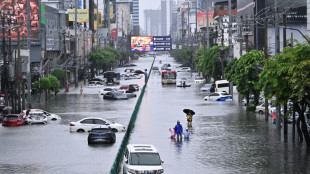
Hot spell roasts eastern US ahead of holiday weekend / Photo: kena betancur - AFP

 London
 13 °C
13 °C
 Manchester
8 °C
Manchester
8 °C
 Glasgow
14 °C
Glasgow
14 °C
 Dublin
 7 °C
7 °C
 Belfast
8 °C
Belfast
8 °C
 Washington
16 °C
Washington
16 °C
 Denver
19 °C
Denver
19 °C
 Atlanta
 15 °C
15 °C
 Dallas
 28 °C
28 °C
 Houston Texas
 27 °C
27 °C
 New Orleans
25 °C
New Orleans
25 °C
 El Paso
25 °C
El Paso
25 °C
 Phoenix
29 °C
Phoenix
29 °C
 Los Angeles
22 °C
San Diego
22 °C
San Francisco
14 °C
Chicago
13 °C
Minneapolis
14 °C
Seattle
10 °C
Portland
13 °C
Salt Lake City
21 °C
Las Vegas
27 °C
Miami
Los Angeles
22 °C
San Diego
22 °C
San Francisco
14 °C
Chicago
13 °C
Minneapolis
14 °C
Seattle
10 °C
Portland
13 °C
Salt Lake City
21 °C
Las Vegas
27 °C
Miami
 25 °C
Jacksonville
20 °C
San Antonio
26 °C
Bermuda
27 °C
Nassau
15 °C
Iqaluit
2 °C
Yellowknife
0 °C
Anchorage
7 °C
Fairbanks
6 °C
Barrow
25 °C
Jacksonville
20 °C
San Antonio
26 °C
Bermuda
27 °C
Nassau
15 °C
Iqaluit
2 °C
Yellowknife
0 °C
Anchorage
7 °C
Fairbanks
6 °C
Barrow
 0 °C
Calgary
3 °C
Edmonton
10 °C
Winnipeg
10 °C
Goose Bay
14 °C
Halifax
14 °C
Boston
13 °C
Ottawa
15 °C
Toronto
16 °C
Detroit
14 °C
Cleveland
14 °C
New York
15 °C
Baltimore
17 °C
Philadelphia
16 °C
Nuuk (Godthåb)
1 °C
Hong Kong
32 °C
Singapore
31 °C
Melbourne
21 °C
Canberra
16 °C
Adelaide
25 °C
Darwin
0 °C
Calgary
3 °C
Edmonton
10 °C
Winnipeg
10 °C
Goose Bay
14 °C
Halifax
14 °C
Boston
13 °C
Ottawa
15 °C
Toronto
16 °C
Detroit
14 °C
Cleveland
14 °C
New York
15 °C
Baltimore
17 °C
Philadelphia
16 °C
Nuuk (Godthåb)
1 °C
Hong Kong
32 °C
Singapore
31 °C
Melbourne
21 °C
Canberra
16 °C
Adelaide
25 °C
Darwin
 32 °C
Perth
21 °C
Fort Worth
26 °C
Honolulu
26 °C
Sydney
17 °C
Johannesburg
19 °C
Dubai
39 °C
Mumbai
30 °C
Zürich
15 °C
Tokyo
24 °C
Seoul
25 °C
Delhi
26 °C
Beijing
24 °C
Riyadh
38 °C
Prague
13 °C
Pennsylvania
16 °C
Valletta
24 °C
Manama
35 °C
Warsaw
13 °C
Stockholm
13 °C
32 °C
Perth
21 °C
Fort Worth
26 °C
Honolulu
26 °C
Sydney
17 °C
Johannesburg
19 °C
Dubai
39 °C
Mumbai
30 °C
Zürich
15 °C
Tokyo
24 °C
Seoul
25 °C
Delhi
26 °C
Beijing
24 °C
Riyadh
38 °C
Prague
13 °C
Pennsylvania
16 °C
Valletta
24 °C
Manama
35 °C
Warsaw
13 °C
Stockholm
13 °C
Millions of Americans sweltered in stifling heat and humidity Thursday with dangerous temperatures expected to hit major cities through the Fourth of July holiday weekend.
The heat wave that has been broiling the Midwest began intensifying in the Northeast, with temperatures expected to approach or climb past 100 degrees Fahrenheit (38 degrees Celsius) in cities including New York, Philadelphia, Boston and Washington.
The heat index -- which measures how hot it feels based on temperature and humidity combined -- was even more merciless. The National Weather Service warned the index could peak as high as 115F (46C) in the mid-Atlantic region.
The intense heat was of particular concern given the Fourth of July celebrations that include many outdoor activities like barbeques and fireworks displays. The heat wave also coincides with a string of weekend World Cup matches.
"This level of rare and long-duration heat, with little or no overnight relief, affects anyone without effective cooling and/or adequate hydration," warned the National Weather Service.
Nighttime temperatures across the Northeast are not anticipated to fall much below 80F (27C).
Authorities across the country urged people to stay indoors especially in the hottest parts of the afternoon, to check on their neighbors, drink more water than usual, and to find air conditioning if they don't have access at home.
New York has designated hundreds of public buildings as cooling centers, extended public swimming pool hours, dispatched volunteers to check on vulnerable residents, and opened cooling stations with misting fans and wet towels.
On Thursday many dog-walking New Yorkers were out early before temperatures grew unbearable and hot asphalt posed risks to their pets.
Student Kaneesha Kumar, 22, was walking her thick-coated dog Chance along Manhattan's Third Avenue where the mercury reached 93 Fahrenheit.
"I just take him on really short walks, and then go back home and put him in the AC, and like, make sure he has water," she told AFP.
Along with detailing public resources to keep cool, New York Mayor Zohran Mamdani stressed on social media that the "power grid is working overtime to keep us cool."
He asked that air conditioning be set to 78F (26C) -- which left him, like many of his predecessors who've made similar requests, facing some backlash on social media, with some people urging the city to turn off the bright lights of Times Square first.
- Power grid concerns -
The Midwestern city of Chicago was likewise bracing for possible grid overload.
"Raise your thermostat as high as is comfortably safe," the power utility ComEd there urged, while calling on residents to delay using laundry, dishwashers and electric vehicle chargers until after dusk.
More frequent, longer-lasting and more intense heat waves are one of the clearest signs of climate change, with Europe also recently hard hit.
Global average surface temperatures have risen roughly 2.5F above pre-industrial averages as a result of human-caused climate change, mainly driven by the burning of fossil fuels.
This week's "heat dome" conditions in the US occur when high-pressure systems trap warm air like the lid on a pot.
The heat wave falls at a particularly busy time in the United States, with amped-up Fourth of July parties as the nation celebrates its 250th anniversary.
The World Cup, which is being co-hosted by the US, Mexico and Canada, is for the first time featuring mandatory three-minute hydration breaks for players.
Toronto, where temperatures Thursday are expected to hit 93F (34C), cancelled a public watch party of the match between Portugal and Croatia, citing extreme heat and humidity.
Z.Franke--BlnAP