After mayor's murder, Mexico battles to bring peace / Photo: Alfredo ESTRELLA - AFP

 London
 23 °C
23 °C

 Manchester
 20 °C
20 °C
 Glasgow
20 °C
Glasgow
20 °C
 Dublin
20 °C
Dublin
20 °C
 Belfast
17 °C
Belfast
17 °C
 Washington
19 °C
Washington
19 °C
 Denver
19 °C
Denver
19 °C
 Atlanta
21 °C
Atlanta
21 °C
 Dallas
24 °C
Dallas
24 °C
 Houston Texas
25 °C
Houston Texas
25 °C
 New Orleans
25 °C
New Orleans
25 °C
 El Paso
19 °C
El Paso
19 °C
 Phoenix
28 °C
Phoenix
28 °C
 Los Angeles
28 °C
San Diego
27 °C
San Francisco
17 °C
Chicago
16 °C
Minneapolis
13 °C
Seattle
12 °C
Portland
14 °C
Salt Lake City
21 °C
Las Vegas
23 °C
Miami
31 °C
Jacksonville
27 °C
San Antonio
25 °C
Bermuda
Los Angeles
28 °C
San Diego
27 °C
San Francisco
17 °C
Chicago
16 °C
Minneapolis
13 °C
Seattle
12 °C
Portland
14 °C
Salt Lake City
21 °C
Las Vegas
23 °C
Miami
31 °C
Jacksonville
27 °C
San Antonio
25 °C
Bermuda
 29 °C
Nassau
18 °C
Iqaluit
0 °C
Yellowknife
29 °C
Nassau
18 °C
Iqaluit
0 °C
Yellowknife
 6 °C
Anchorage
6 °C
Anchorage
 5 °C
Fairbanks
-1 °C
Barrow
-4 °C
Calgary
13 °C
Edmonton
20 °C
Winnipeg
7 °C
Goose Bay
11 °C
Halifax
18 °C
Boston
18 °C
Ottawa
12 °C
Toronto
13 °C
Detroit
14 °C
Cleveland
17 °C
New York
18 °C
Baltimore
20 °C
Philadelphia
18 °C
Nuuk (Godthåb)
3 °C
Hong Kong
5 °C
Fairbanks
-1 °C
Barrow
-4 °C
Calgary
13 °C
Edmonton
20 °C
Winnipeg
7 °C
Goose Bay
11 °C
Halifax
18 °C
Boston
18 °C
Ottawa
12 °C
Toronto
13 °C
Detroit
14 °C
Cleveland
17 °C
New York
18 °C
Baltimore
20 °C
Philadelphia
18 °C
Nuuk (Godthåb)
3 °C
Hong Kong
 26 °C
Singapore
29 °C
Melbourne
29 °C
Canberra
13 °C
Adelaide
26 °C
Singapore
29 °C
Melbourne
29 °C
Canberra
13 °C
Adelaide
 11 °C
Darwin
26 °C
Perth
15 °C
Fort Worth
23 °C
Honolulu
24 °C
Sydney
17 °C
Johannesburg
19 °C
Dubai
34 °C
Mumbai
31 °C
Zürich
23 °C
Tokyo
21 °C
Seoul
12 °C
Delhi
31 °C
Beijing
9 °C
Riyadh
37 °C
Prague
20 °C
Pennsylvania
18 °C
Valletta
25 °C
Manama
34 °C
Warsaw
18 °C
Stockholm
16 °C
11 °C
Darwin
26 °C
Perth
15 °C
Fort Worth
23 °C
Honolulu
24 °C
Sydney
17 °C
Johannesburg
19 °C
Dubai
34 °C
Mumbai
31 °C
Zürich
23 °C
Tokyo
21 °C
Seoul
12 °C
Delhi
31 °C
Beijing
9 °C
Riyadh
37 °C
Prague
20 °C
Pennsylvania
18 °C
Valletta
25 °C
Manama
34 °C
Warsaw
18 °C
Stockholm
16 °C
The brazen murder of a small-city mayor shocked Mexico and forced President Claudia Sheinbaum to step up an offensive against all-powerful drug cartels.
But even after a deployment totalling thousands troops and the killing of a top cartel capo, she has struggled to impose peace in restive Pacific coast states.
Residents of the state of Michoacan's second city Uruapan, have resigned themselves to live with violence.
"You can't be out on the streets too late anymore," 24-year-old student Natalia Miranda told AFP. "If you're assaulted, you don't make it out alive."
Uruapan, a city of more than 300,000 people, is the center of Mexico's multi-billion-dollar avocado industry. It's also a stronghold of several of the world's largest cocaine and fentanyl trafficking cartels.
In the town square, people chat amiably in the shadow of a memorial to slain cowboy-hat-wearing mayor Carlos Manzo.
The 40-year-old was shot multiple times during November's Day of the Dead festival, allegedly by a 17-year-old drug addict working for the Jalisco New Generation Cartel.
After his death, protesters set fire to public buildings and clashed with police, resulting in over 100 injuries.
- 'We can't forget' -
Uruapan has a long history of violence. In 2006, armed groups tossed five human heads onto a nightclub dance floor in the city.
In the 20 years since, there has been a cycle of intensifying violence.
"Michoacan was on the brink of becoming a failed state," governor Alfredo Ramirez Bedolla told AFP, recounting how farmers created self-defense militias just to survive.
But the situation reached a point of inflection with Manzo's murder, as much for residents as for Sheinbaum's government.
Around 20 people were arrested for Manzo's killing, including seven of his bodyguards.
The young gunman was killed by the mayor's security team at the scene.
"We can't forget what happened," said Manzo's widow, Grecia Quiroz, who has been the mayor of Uruapan since her husband's death.
She has no political experience but took office as a symbol of resistance and to demand that Sheinbaum tackle the cartels.
"This awoke not just Michoacan, but all of Mexico," she told AFP while surrounded by bodyguards to keep would-be assassins at bay.
"We cannot ignore or turn a blind eye to the issue of security," she said.
"It is time for society to come together, for us to demand from the government what must be demanded, for us to raise our voices, for us not to remain silent, and for fear to no longer paralyze us."
- 'Narco politicians' -
Following Manzo's death, President Sheinbaum vowed "zero impunity" and sent additional troops to Michoacan.
She also moved against Nemesio Oseguera, a Michoacan native and notorious leader of the Jalisco New Generation Cartel.
"El Mencho", as he was better known, was captured in February in Jalisco state in a military sweep and died of his injuries on route to the hospital.
The cartel responded nationwide by setting up highway blockades and burning buildings in 20 of Mexico's 32 states.
Over 60 people died, the majority in neighboring Jalisco.
The authorities escalated further, arresting Audias Flores, El Mencho's presumed successor, as well as his top accountant and other lieutenants.
Since Sheinbaum came to office in late 2024, more than 52,000 people have been detained for suspected cartel ties.
She has shifted away from the "hugs not bullets" strategy of her predecessor and leftist political mentor, Andres Manuel Lopez Obrador.
There has been a renewed focus on strengthening the National Guard, boosting intelligence, and targeted troop deployments.
But still, polls show 60 percent of Mexicans feel unsafe, and Mexico's first female president is under intense pressure from Washington.
President Donald Trump has threatened to strike targets south of the border if Mexican authorities do not act.
The US government has also trained its sights on another target: "narco politicians."
US federal prosecutors indicted the governor of neighboring Sinaloa state, who is a member of Sheinbaum's ruling Morena party. So far, Mexican authorities have refused to arrest him, claiming there is a lack of evidence.
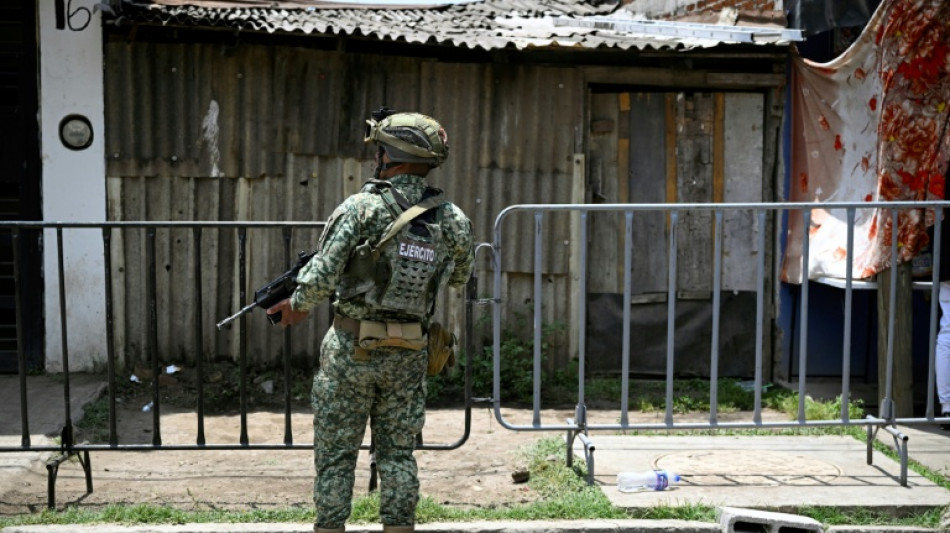
Today, camouflaged National Guard troops patrol Uruapan with rifles nestled, or cruise the streets in pickup trucks mounted with machine guns.
"You might say to yourself, 'it's better to stay in my house to stay safe,'" said 50-year-old resident Teresa Silva.
Silva, a housewife, rests on a bench in the plaza, a few meters from a military checkpoint.
"It's a little bit quieter," she says.
The violence means she leaves her house less, but she does not have any other option than living with fear.
"The only thing we can do is keep living," she said.
I.Pfeiffer--BlnAP