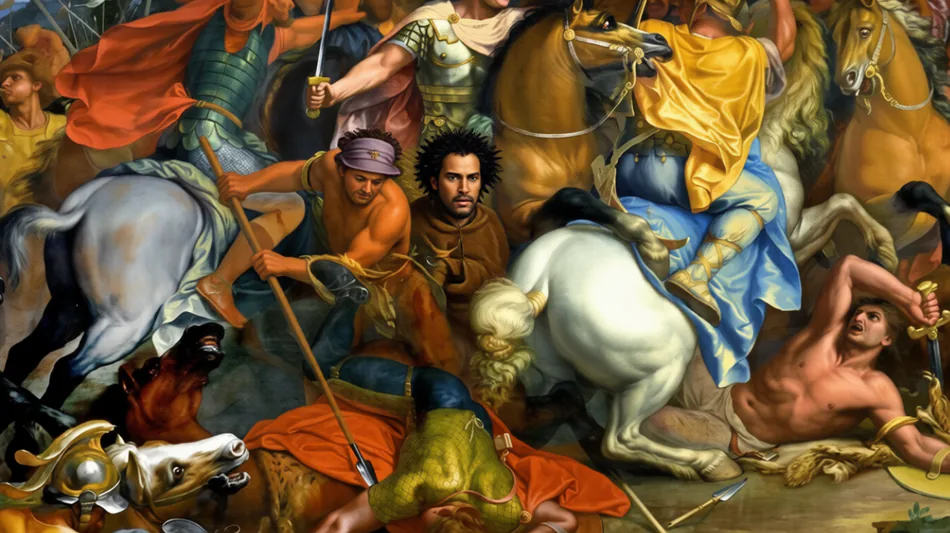
Edmund Richardson Wins Baillie Gifford Prize for 'Alexander' Biography

 London
 9 °C

 Manchester
 8 °C
 Glasgow
6 °C
 Dublin
9 °C
 Belfast
10 °C
 Washington
 18 °C
 Denver
15 °C
 Atlanta
 23 °C
 Dallas
22 °C
 Houston Texas
 28 °C
 New Orleans
24 °C
 El Paso
19 °C
 Phoenix
24 °C
 Los Angeles
27 °C
San Diego
27 °C
San Francisco
19 °C
Chicago
8 °C
Minneapolis
8 °C
Seattle
12 °C
Portland
15 °C
Salt Lake City
 12 °C
Las Vegas
21 °C
Miami
29 °C
Jacksonville
29 °C
San Antonio
 23 °C
Bermuda
25 °C
Nassau
18 °C
Iqaluit
 -5 °C
Yellowknife
-1 °C
Anchorage
-2 °C
Fairbanks
-3 °C
Barrow
-5 °C
Calgary
11 °C
Edmonton
13 °C
Winnipeg
1 °C
Goose Bay
15 °C
Halifax
 17 °C
Boston
18 °C
Ottawa
14 °C
Toronto
12 °C
Detroit
8 °C
Cleveland
9 °C
New York
18 °C
Baltimore
18 °C
Philadelphia
17 °C
Nuuk (Godthåb)
0 °C
Hong Kong
26 °C
Singapore
25 °C
Melbourne
29 °C
Canberra
8 °C
Adelaide
10 °C
Darwin
28 °C
Perth
 16 °C
Fort Worth
21 °C
Honolulu
26 °C
Sydney
15 °C
Johannesburg
23 °C
Dubai
30 °C
Mumbai
30 °C
Zürich
8 °C
Tokyo
16 °C
Seoul
1 °C
Delhi
19 °C
Beijing
0 °C
Riyadh
27 °C
Prague
2 °C
Pennsylvania
21 °C
Valletta
16 °C
Manama
30 °C
Warsaw
4 °C
Stockholm
2 °C
Edmund Richardson, a professor of classics, has won the prestigious £50,000 Baillie Gifford Prize for Nonfiction for his biography 'Alexander: God, King, Man.' The work examines the life of the ancient Macedonian ruler through the lens of contemporary political uncertainty and the author’s own battle with cancer. Richardson noted that the timing of the award coincided with the U.S. midterm elections, highlighting the book's themes regarding the limits of power.
Edmund Richardson, a professor of classics, has been awarded the £50,000 Baillie Gifford Prize for Nonfiction for his biography "Alexander: God, King, Man." The announcement of the winner coincided with the United States midterm elections, a timing Richardson noted as resonant given the book’s themes regarding the limits of power.
In discussing the relevance of Alexander’s story to the present day, Richardson observed that current events highlight "limits to what unlimited wealth and power can do." He stated that humanity eventually "catches up with" those who wield such influence, noting that Alexander sought to transform the world but ultimately "leaves it in ruins."
Richardson, a professor of classics, is known for his distinctive personal style, often wearing purple velvet jackets and scarves. During an interview at the offices of the PR company handling the Baillie Gifford prize in London, he expressed disbelief at the recognition. He remarked that he fully expected to be told there had been a mistake and that Patrick Radden Keefe, a previous winner and favorite for the prize, was waiting to receive it instead.
The biography is described as a triumph for classical studies, arriving in a year when interest in ancient narratives has surged, evidenced by the box office success of Christopher Nolan’s "The Odyssey." Richardson first encountered Alexander through Mary Renault’s 1969 fictional trilogy. Critics have characterized his new book as blending elements of novel and history, aiming to present the ruler as a flesh-and-blood figure for modern readers.
Richardson makes significant claims about Alexander’s historical impact, writing that the ruler "reshaped reality more profoundly than almost anyone else in history." While acknowledging that Alexander’s expansionist campaigns were brutal and his empire unraveled before his death, Richardson argues that the true legacy lies in the "ripple effects" still felt today. He points to the transmission of Babylonian science to Greece, Greek art appearing on the borders of the Indus, and Egyptian scholarship influencing the understanding of Homer. Richardson describes Alexander as antiquity’s equivalent to the internet, a figure who connected the world in unprecedented ways.
The biography covers Alexander’s life from his ascent to the throne at age 20 in 336 BC following his father’s assassination, through his conquests of the Persian Empire and much of the known world by age 30. The narrative concludes with his death in Babylon at age 32. Richardson describes the process of writing the book as creating a "beautiful monster," noting the immense challenge of competing with thousands of existing accounts by admired historians.
Prior to this project, Richardson focused on obscure historical figures, such as the 19th-century archaeologist Charles Masson in his previous book, "Alexandria: The Quest for the Lost City." He admitted to initial terror at the prospect of writing about Alexander, fearing he could not match the existing scholarship. However, he sought to uncover the man before he became "great," embarking on a decade-long research journey.
Richardson’s research took him from the British Museum to the catacombs of Egypt and the foothills of the Himalayas. He utilized computer simulations and new discoveries to access evidence unavailable to earlier historians. His travels were frequently interrupted by modern unrest. In Cairo, he encountered a barricade of burning tires during a protest. A planned visit to Afghanistan was abandoned after the Taliban ransacked his hotel.
Richardson reflected on the dangers associated with writing about Alexander, noting that terrible things have happened to those who take up the subject. He cited Callisthenes, Aristotle’s great-nephew and Alexander’s first biographer, who was crucified according to some sources. This history gave Richardson a sense that the story "consumes people" and heightened his awareness of his own fallibility as a historian.
The writing process coincided with a serious personal health crisis. Approximately three years ago, Richardson was diagnosed with cancer, having previously survived melanoma as a teenager. At barely 40 years old, he wrote the book while uncertain if he would survive to see its publication. He described his universe narrowing to hospital corridors and fluorescent lights, using writing as a way to travel "to the world of ideas." The book and his loved ones provided a version of himself that was "less frightening."
Although given an all-clear, Richardson returned to the hospital last year after collapsing, likely due to stress. Upon waking, he found patients on his ward handcuffed to police officers. He described this moment as a turning point, helping him find a "ray of hope" in the manuscript’s ending, which he had previously struggled with given the inevitability of death and failure.
Richardson, now 44, grew up in Bristol as the only child of two academics. His father is an American mathematician, and his mother is an art historian of English and Irish descent. He attended a Bristol grammar school before studying classics at Cambridge, where he was taught by Mary Beard. During a postdoctoral fellowship at Princeton, he met his fiancée, Yepoka Yeebo, a journalist and writer studying at Columbia. They lived in New York before returning to London. Richardson credited Yeebo with enabling him to see the "wonder of things."
Richardson’s next subject is the British Egyptologist Flinders Petrie, continuing his focus on archaeologists who sought to defeat death through their work. He expressed honor at the public interest in his book and the ancient world, suggesting that working with fragments allows people to make these stories their own. He noted that there is no definitive book about Alexander, anticipating many more will follow.
Reflecting on the completion of his ten-year project, Richardson acknowledged the difficult times involved but expressed relief at emerging into the light. He is scheduled to appear on the BBC to discuss the biography further.
V.Kranz--BlnAP