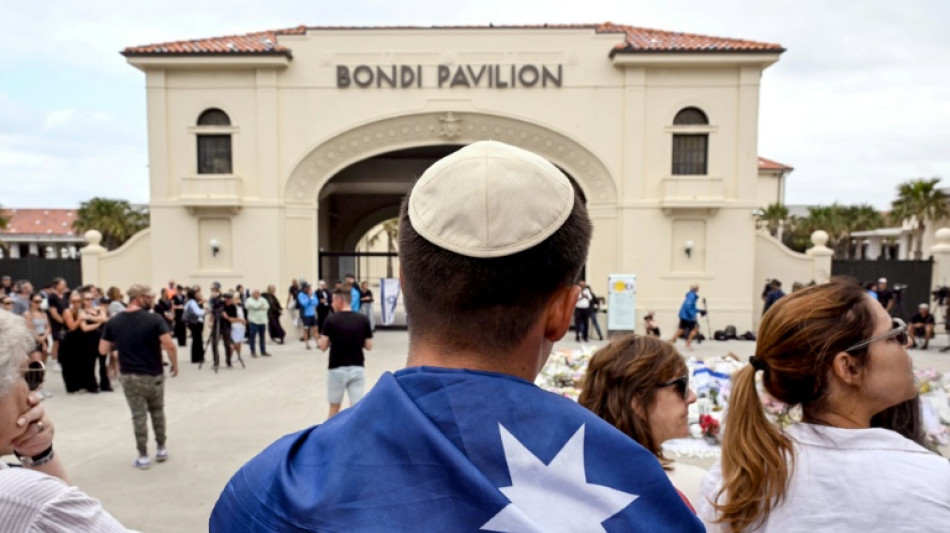
Australia defends record on antisemitism after Bondi Beach attack / Photo: Saeed KHAN - AFP

 London
 12 °C
12 °C

 Manchester
 16 °C
16 °C
 Glasgow
 11 °C
11 °C
 Dublin
14 °C
Dublin
14 °C
 Belfast
13 °C
Belfast
13 °C
 Washington
13 °C
Washington
13 °C
 Denver
18 °C
Denver
18 °C
 Atlanta
18 °C
Atlanta
18 °C
 Dallas
30 °C
Dallas
30 °C
 Houston Texas
30 °C
Houston Texas
30 °C
 New Orleans
29 °C
New Orleans
29 °C
 El Paso
23 °C
El Paso
23 °C
 Phoenix
26 °C
Phoenix
26 °C
 Los Angeles
23 °C
San Diego
22 °C
San Francisco
17 °C
Chicago
18 °C
Minneapolis
15 °C
Seattle
14 °C
Portland
20 °C
Salt Lake City
20 °C
Las Vegas
32 °C
Miami
Los Angeles
23 °C
San Diego
22 °C
San Francisco
17 °C
Chicago
18 °C
Minneapolis
15 °C
Seattle
14 °C
Portland
20 °C
Salt Lake City
20 °C
Las Vegas
32 °C
Miami
 27 °C
Jacksonville
21 °C
San Antonio
31 °C
Bermuda
28 °C
Nassau
16 °C
Iqaluit
2 °C
Yellowknife
9 °C
Anchorage
27 °C
Jacksonville
21 °C
San Antonio
31 °C
Bermuda
28 °C
Nassau
16 °C
Iqaluit
2 °C
Yellowknife
9 °C
Anchorage
 12 °C
Fairbanks
12 °C
Fairbanks
 10 °C
Barrow
-1 °C
Calgary
15 °C
Edmonton
10 °C
Barrow
-1 °C
Calgary
15 °C
Edmonton
 17 °C
Winnipeg
15 °C
Goose Bay
10 °C
Halifax
12 °C
Boston
11 °C
Ottawa
10 °C
Toronto
13 °C
Detroit
12 °C
Cleveland
12 °C
New York
16 °C
Baltimore
14 °C
Philadelphia
15 °C
Nuuk (Godthåb)
1 °C
Hong Kong
17 °C
Winnipeg
15 °C
Goose Bay
10 °C
Halifax
12 °C
Boston
11 °C
Ottawa
10 °C
Toronto
13 °C
Detroit
12 °C
Cleveland
12 °C
New York
16 °C
Baltimore
14 °C
Philadelphia
15 °C
Nuuk (Godthåb)
1 °C
Hong Kong
 30 °C
Singapore
30 °C
Melbourne
26 °C
Canberra
23 °C
Adelaide
24 °C
Darwin
31 °C
Perth
20 °C
Fort Worth
30 °C
Honolulu
29 °C
Sydney
25 °C
Johannesburg
13 °C
Dubai
30 °C
Mumbai
29 °C
Zürich
10 °C
Tokyo
30 °C
Singapore
30 °C
Melbourne
26 °C
Canberra
23 °C
Adelaide
24 °C
Darwin
31 °C
Perth
20 °C
Fort Worth
30 °C
Honolulu
29 °C
Sydney
25 °C
Johannesburg
13 °C
Dubai
30 °C
Mumbai
29 °C
Zürich
10 °C
Tokyo
 27 °C
Seoul
24 °C
Delhi
25 °C
Beijing
22 °C
Riyadh
27 °C
Prague
10 °C
Pennsylvania
11 °C
Valletta
23 °C
Manama
32 °C
Warsaw
11 °C
Stockholm
12 °C
27 °C
Seoul
24 °C
Delhi
25 °C
Beijing
22 °C
Riyadh
27 °C
Prague
10 °C
Pennsylvania
11 °C
Valletta
23 °C
Manama
32 °C
Warsaw
11 °C
Stockholm
12 °C
A mass shooting at a Jewish festival on Australia's iconic Bondi Beach has revived allegations that the government is dragging its feet in the fight against antisemitism.
A father and son shot and killed 15 people at an annual Hanukkah festival on Sydney's most famous beach on Sunday, an act labelled by Australian and foreign leaders alike as an assault on Jews.
The father was shot and killed by police and the son is in a critical condition in hospital.
While Canberra has condemned the attack, many in the Jewish community have questioned its determination to fight prejudice against them.
The government's special envoy to combat antisemitism, Jillian Segal, said on Monday that it has been "seeping into society for many years and we have not come out strongly enough against it".
The Bondi shooting was "attack on Australia, not just on the Jewish community", she told public broadcaster ABC.
Segal was appointed Australia's first antisemitism envoy in 2024, after a string of attacks in Sydney and Melbourne following the October 7, 2023 Hamas attack on Israel and the ensuing war in Gaza.
Even before the latest shooting, she has decried an upswing in violence against Jewish Australians.
"We've seen cars being torched, synagogues being torched, individual Jews harassed and attacked, and that is completely unacceptable," she said in July.
"These are not isolated events, and they form part of a broader pattern of intimidation and violence that is making Jewish Australians feel very unsafe."
- 'Pouring oil' -
In a 16-page report, Segal made a broad set of recommendations, including strengthening hate and intimidation laws, improving education about the Holocaust and other issues, and holding universities accountable for antisemitism.
The head of the Australian Jewish Association said the Bondi shooting was a "tragedy but entirely foreseeable".
The government has "failed to take adequate actions to protect the Jewish community", Robert Gregory told AFP.
Prime Minister Anthony Albanese on Monday rejected accusations that he had failed to act on Segal's recommendations.
"We have acted and will continue to act on the implementation of the plan," he told reporters, listing steps such as criminalising hate speech, banning the Nazi salute and hate symbols, and creating a student ombudsman with investigative powers.
Israeli Prime Minister Benjamin Netanyahu, who has slammed Canberra for criticising his country's war policies, accused the Australian government of "pouring oil on the fire of antisemitism" through inaction in the months leading up to the shooting.
Through the 1950s, Australia was a welcoming refuge for Jews fleeing the horrors of the Holocaust.
The city of Melbourne at one point housed, per capita, the largest population of Holocaust survivors anywhere outside of Israel.
For decades Australia has positioned itself as a close friend of Israel.
But these ties started to fray in the wake of the Gaza war, with Australia questioning Israel's conduct and accusing it of blocking aid to starving Palestinians.
- 'Key debate' -
Canberra further infuriated Netanyahu in August when it unveiled plans to formally recognise a Palestinian state.
In an extraordinary outburst, the Israeli leader dubbed Albanese a "weak politician who betrayed Israel".
The Australian government has accused Iran -- which condemned Sunday's "violent attack in Sydney" -- of being behind two antisemitic attacks last year.
Tehran directed the torching of a kosher cafe in Sydney's Bondi suburb in October 2024, and a major arson attack on the Adass Israel Synagogue in Melbourne in December 2024, the government said in August, citing intelligence findings.
It also expelled Tehran's ambassador.
Questions about Australia's defence of its Jewish community are likely to linger, said Daniela Gavshon, Australia director of Human Rights Watch.
"Strong political leadership is vital in ensuring everyone can live in safety and practise their religious beliefs," she said.
"The actions needed to address intolerance and counter violent extremism will be a key debate in Australia for days and weeks to come."
T.Wolf--BlnAP