Seoul leads rebound across Asian stocks, oil extends gains / Photo: - - US Central Command (CENTCOM)/AFP

 London
 23 °C
23 °C

 Manchester
20 °C
Manchester
20 °C
 Glasgow
 13 °C
13 °C
 Dublin
18 °C
Dublin
18 °C
 Belfast
18 °C
Belfast
18 °C
 Washington
 16 °C
16 °C
 Denver
 25 °C
25 °C
 Atlanta
29 °C
Atlanta
29 °C
 Dallas
 35 °C
35 °C
 Houston Texas
35 °C
Houston Texas
35 °C
 New Orleans
31 °C
New Orleans
31 °C
 El Paso
29 °C
El Paso
29 °C
 Phoenix
35 °C
Phoenix
35 °C
 Los Angeles
25 °C
San Diego
25 °C
San Francisco
16 °C
Chicago
16 °C
Minneapolis
17 °C
Seattle
18 °C
Portland
18 °C
Salt Lake City
22 °C
Las Vegas
27 °C
Miami
31 °C
Jacksonville
31 °C
San Antonio
33 °C
Bermuda
31 °C
Nassau
19 °C
Iqaluit
2 °C
Yellowknife
14 °C
Anchorage
6 °C
Fairbanks
3 °C
Barrow
3 °C
Calgary
19 °C
Edmonton
23 °C
Winnipeg
Los Angeles
25 °C
San Diego
25 °C
San Francisco
16 °C
Chicago
16 °C
Minneapolis
17 °C
Seattle
18 °C
Portland
18 °C
Salt Lake City
22 °C
Las Vegas
27 °C
Miami
31 °C
Jacksonville
31 °C
San Antonio
33 °C
Bermuda
31 °C
Nassau
19 °C
Iqaluit
2 °C
Yellowknife
14 °C
Anchorage
6 °C
Fairbanks
3 °C
Barrow
3 °C
Calgary
19 °C
Edmonton
23 °C
Winnipeg
 18 °C
Goose Bay
15 °C
Halifax
16 °C
Boston
17 °C
Ottawa
16 °C
Toronto
16 °C
Detroit
17 °C
Cleveland
18 °C
New York
19 °C
Baltimore
16 °C
Philadelphia
18 °C
Nuuk (Godthåb)
5 °C
Hong Kong
28 °C
Singapore
25 °C
Melbourne
31 °C
Canberra
10 °C
Adelaide
12 °C
Darwin
25 °C
Perth
13 °C
Fort Worth
34 °C
Honolulu
28 °C
Sydney
14 °C
Johannesburg
17 °C
Dubai
35 °C
Mumbai
18 °C
Goose Bay
15 °C
Halifax
16 °C
Boston
17 °C
Ottawa
16 °C
Toronto
16 °C
Detroit
17 °C
Cleveland
18 °C
New York
19 °C
Baltimore
16 °C
Philadelphia
18 °C
Nuuk (Godthåb)
5 °C
Hong Kong
28 °C
Singapore
25 °C
Melbourne
31 °C
Canberra
10 °C
Adelaide
12 °C
Darwin
25 °C
Perth
13 °C
Fort Worth
34 °C
Honolulu
28 °C
Sydney
14 °C
Johannesburg
17 °C
Dubai
35 °C
Mumbai
 29 °C
Zürich
15 °C
Tokyo
23 °C
Seoul
18 °C
Delhi
28 °C
Beijing
19 °C
Riyadh
34 °C
Prague
29 °C
Zürich
15 °C
Tokyo
23 °C
Seoul
18 °C
Delhi
28 °C
Beijing
19 °C
Riyadh
34 °C
Prague
 13 °C
Pennsylvania
17 °C
Valletta
26 °C
Manama
34 °C
Warsaw
12 °C
Stockholm
11 °C
13 °C
Pennsylvania
17 °C
Valletta
26 °C
Manama
34 °C
Warsaw
12 °C
Stockholm
11 °C
Asian equities jumped Thursday after a three-day rout sparked by the Middle East war, but concerns about an extended conflict helped oil extend gains, while analysts warned of more volatility ahead.
Seoul was again the standout, with the Kospi soaring 12 percent at one point as traders snapped up bargains following the previous two days' near 20 percent collapse that put the index within reach of a bear market.
South Korea's president ordered on Thursday the activation of a $68 billion stabilisation fund as the Mideast crisis roiled markets.
The advances followed a positive day on Wall Street, where forecast-topping figures on US private-sector hiring and services industry activity provided some much-needed positive news.
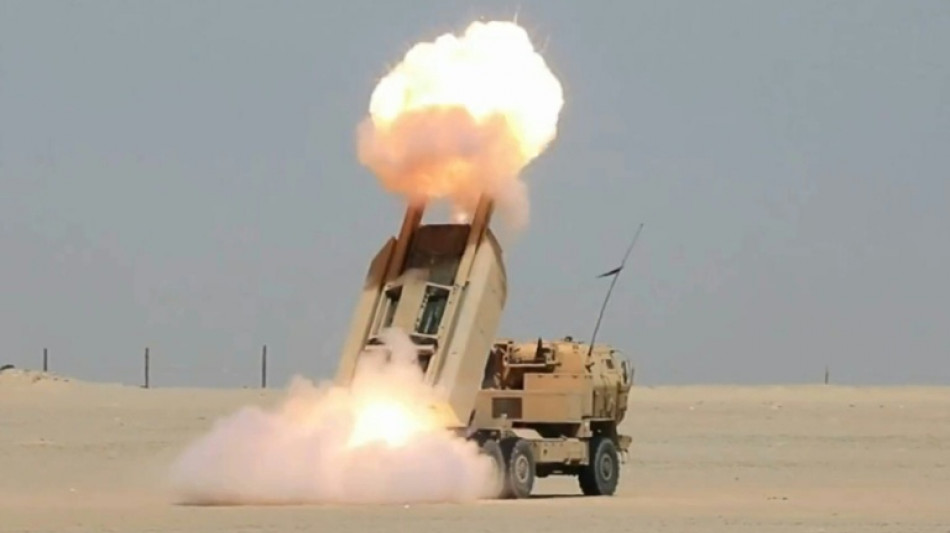
Global markets have been thrown into turmoil this week after the United States and Israel began strikes against Iran on Saturday, killing its supreme leader and sparking a wave of retaliatory attacks across the Gulf.
Crucially, Tehran also effectively shut down the Strait of Hormuz, through which a fifth of the world's crude and considerable liquefied natural gas (LNG) supplies travel.
That sent the price of energy soaring, with both main oil contracts up almost 20 percent since Friday, and ramped up the likelihood of a fresh spike in inflation, dealing a blow to central bank hopes of lowering interest rates.
The sell-off in equities also came as traders were questioning elevated prices in the tech sector after a long-running AI-fuelled rally that saw several markets hit multiple record highs.
Among the best Asian performers was Seoul, which had advanced about 50 percent since the start of the year -- having gained 76 percent in 2025 -- thanks to a surge in chip giants Samsung and SK hynix.
But it was at the forefront of this week's collapse, shedding almost 19 percent on Tuesday and Wednesday as traders returned from a long weekend.
It clawed back a substantial part of those losses Thursday, thanks to a flood of cash into the semiconductor makers. But observers remained cautious.
"Much of the move reflects technical traders stepping in to buy the dip after the market fell nearly 20% from its peak in just a matter of days, one of the worst-hit Asian markets," Reed Capital Partners' Gerald Gan said.
"It remains unclear whether this marks a genuine inflection point for further upside or simply a bear-market rally, especially with geopolitical tensions continuing to escalate in the Middle East."
- 'Not the end of volatility'
There were also gains elsewhere in the region, with Tokyo piling on more than one percent at one point, while Hong Kong, Shanghai, Sydney, Singapore, Taipei and Manila were also well up.
But SPI Asset Management's Stephen Innes warned: "The real driver remains the same fuse that lit the selloff in the first place: oil.
"Brent grinding higher and (West Texas Intermediate) climbing toward the mid-$70s is not yet a supply crisis, but it is a reminder that energy remains the hidden central bank of the global economy.
"Oil does not just move commodities. It reshapes rate expectations, equity valuations, and currency flows all at once."
He added that traders were having to weigh the geopolitical issues against data showing the US economy, the world's biggest, continued to grow.
"The rebound we are seeing is not the end of volatility. It is the market taking a breath before deciding which narrative deserves the steering wheel. And right now the steering wheel still belongs to oil."
Concerns about how long the war will go on continue to weigh, adding to economic concerns, with Danish shipping giant Maersk saying it was suspending bookings in the Gulf until further notice.
And Tehran denied a New York Times report that it had offered to negotiate with the United States to end the war, Bloomberg reported.
National Australia Bank's Ken Crompton added that oil traders were unmoved by US President Donald Trump's pledge to protect ships through the Strait of Hormuz, which had provided a small glimmer of support Wednesday.
"The fact is it's just not feasible to reasonably protect all ships in the region," he wrote, pointing out that Houthis in Yemen had carried out multiple attacks on ships in the past.
Iran's Revolutionary Guards claimed "complete control" of the Strait, with reports of additional vessels coming under attack Wednesday.
Energy intelligence firm Kpler said oil tanker transits through the Strait had dropped by 90 percent from last week.
- Key figures at around 0230 GMT -
Seoul - Kospi: UP 10.8 percent at 5,643.93
Tokyo - Nikkei 225: UP 2.7 percent at 55,713.27 (break)
Hong Kong - Hang Seng Index: UP 1.9 percent at 25,718.31
Shanghai - Composite: UP 0.8 percent at 4,116.50
Euro/dollar: DOWN at $1.1630 from $1.1640 on Wednesday
Pound/dollar: DOWN at $1.3368 from $1.3373
Dollar/yen: DOWN at 156.78 yen from 157.06 yen
Euro/pound: DOWN at 86.98 pence from 87.03 pence
West Texas Intermediate: UP 2.8 percent at $76.75 per barrel
Brent North Sea Crude: UP 2.2 percent at $83.17 per barrel
New York - Dow: UP 0.5 percent at 48,739.41 (close)
London - FTSE 100: UP 0.8 percent at 10,567.65 (close)
F.S.Meyer--BlnAP