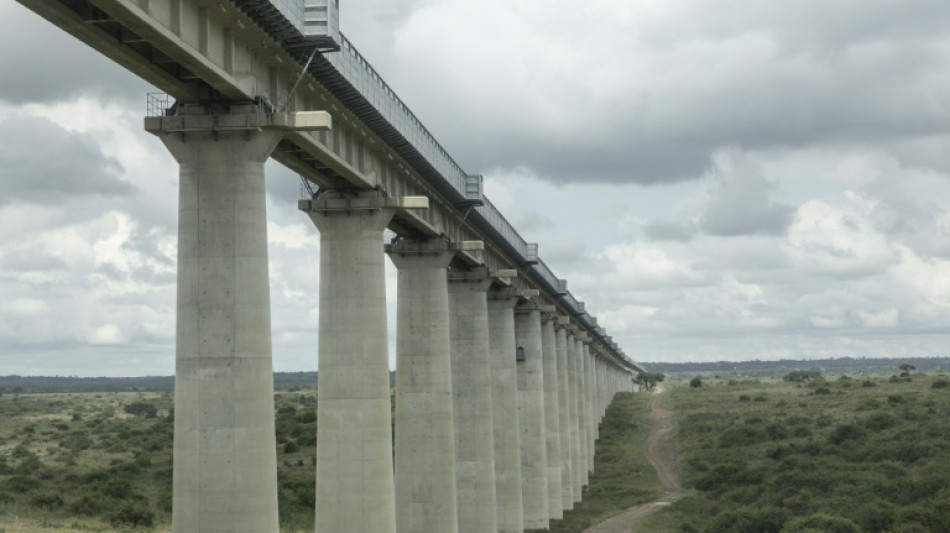
Kenya, Uganda open rail extension burdened by Chinese debt / Photo: SIMON MAINA - AFP/File

 London
 18 °C
18 °C

 Manchester
 15 °C
15 °C
 Glasgow
10 °C
Glasgow
10 °C
 Dublin
 20 °C
20 °C
 Belfast
18 °C
Belfast
18 °C
 Washington
 20 °C
20 °C
 Denver
 24 °C
24 °C
 Atlanta
33 °C
Atlanta
33 °C
 Dallas
 37 °C
37 °C
 Houston Texas
 34 °C
34 °C
 New Orleans
33 °C
New Orleans
33 °C
 El Paso
 32 °C
32 °C
 Phoenix
37 °C
Phoenix
37 °C
 Los Angeles
26 °C
San Diego
25 °C
San Francisco
16 °C
Chicago
18 °C
Minneapolis
15 °C
Seattle
20 °C
Portland
23 °C
Salt Lake City
26 °C
Las Vegas
32 °C
Miami
29 °C
Jacksonville
29 °C
San Antonio
36 °C
Bermuda
29 °C
Nassau
21 °C
Iqaluit
4 °C
Yellowknife
17 °C
Anchorage
10 °C
Fairbanks
8 °C
Barrow
2 °C
Calgary
26 °C
Edmonton
35 °C
Winnipeg
20 °C
Goose Bay
14 °C
Halifax
17 °C
Boston
18 °C
Ottawa
14 °C
Toronto
15 °C
Detroit
16 °C
Cleveland
16 °C
New York
22 °C
Baltimore
20 °C
Philadelphia
22 °C
Nuuk (Godthåb)
4 °C
Hong Kong
27 °C
Singapore
27 °C
Melbourne
27 °C
Canberra
8 °C
Adelaide
9 °C
Darwin
24 °C
Perth
12 °C
Fort Worth
37 °C
Honolulu
29 °C
Sydney
14 °C
Johannesburg
Los Angeles
26 °C
San Diego
25 °C
San Francisco
16 °C
Chicago
18 °C
Minneapolis
15 °C
Seattle
20 °C
Portland
23 °C
Salt Lake City
26 °C
Las Vegas
32 °C
Miami
29 °C
Jacksonville
29 °C
San Antonio
36 °C
Bermuda
29 °C
Nassau
21 °C
Iqaluit
4 °C
Yellowknife
17 °C
Anchorage
10 °C
Fairbanks
8 °C
Barrow
2 °C
Calgary
26 °C
Edmonton
35 °C
Winnipeg
20 °C
Goose Bay
14 °C
Halifax
17 °C
Boston
18 °C
Ottawa
14 °C
Toronto
15 °C
Detroit
16 °C
Cleveland
16 °C
New York
22 °C
Baltimore
20 °C
Philadelphia
22 °C
Nuuk (Godthåb)
4 °C
Hong Kong
27 °C
Singapore
27 °C
Melbourne
27 °C
Canberra
8 °C
Adelaide
9 °C
Darwin
24 °C
Perth
12 °C
Fort Worth
37 °C
Honolulu
29 °C
Sydney
14 °C
Johannesburg
 16 °C
Dubai
34 °C
Mumbai
27 °C
Zürich
12 °C
Tokyo
24 °C
Seoul
17 °C
Delhi
27 °C
Beijing
16 °C
Riyadh
32 °C
Prague
14 °C
Pennsylvania
19 °C
Valletta
25 °C
Manama
33 °C
Warsaw
11 °C
Stockholm
13 °C
16 °C
Dubai
34 °C
Mumbai
27 °C
Zürich
12 °C
Tokyo
24 °C
Seoul
17 °C
Delhi
27 °C
Beijing
16 °C
Riyadh
32 °C
Prague
14 °C
Pennsylvania
19 °C
Valletta
25 °C
Manama
33 °C
Warsaw
11 °C
Stockholm
13 °C
The presidents of Kenya and Uganda met near their shared border Saturday to mark the multi-billion-dollar, long-delayed extension of a Chinese-built railway that has left Kenya heavily in debt.
The Standard Gauge Railway, built from 2013 to 2019, connects the Kenyan port of Mombasa to its capital Nairobi, and on to the lake town of Naivasha, but China refused further lending before it could be extended to Uganda as planned.
Kenya now spends roughly $1 billion a year servicing Chinese debt, most of it borrowed to build the railway.
That is far more than the line generates in revenue -- around $165 million last year -- even if passenger and cargo numbers have been growing strongly over the past year.
A report by Kenya's auditor general last year found more than $260 million had been wasted just on penalties and interest from late debt payments.
Yet despite the controversy over the cost, Kenya has been keen to finish the line.
Kenyan President William Ruto said the rail link will "define generations", speaking at a ceremony in grand pomp and circumstance with his Ugandan counterpart Yoweri Museveni in Kisumu, near the Kenya-Uganda border.
Ruto argued the line would slash logistics costs that "undermine competitiveness" in east Africa.
If the ambitious building schedule is to be believed, the line is due to reach Kisumu by June 2027. The next phase will then take the line to Malaba, a town on the border.
"Cargo takes an average of 80 hours to move from Mombasa to Malaba and more than 100 hours to reach Kampala," the Ugandan capital, Ruto said.
"We cannot build prosperity on inefficiency."
- 'Irrational and wasteful' -
Museveni said the line would reduce the inefficiencies in his own country's infrastructure.
"The railway is part of the rationalisation of our transport system, especially on the Uganda side, which is irrational and wasteful," the veteran leader told the ceremony.
Ruto broke ground on the next phase in Narok County on Thursday, arguing that it will create jobs and reduce road congestion.
"We have thought through this project (and)... its finance," he insisted.
Treasury estimates say the overall cost will be more than 500 billion shillings ($3.9 billion), according to Kenya's Business Daily.
Kenya is not taking more cash from Chinese banks this time -- instead borrowing against future cargo taxes -- though it is partnering with Chinese transport firms to build the new phase.
China lent Kenya $9.7 billion between 2000 and 2019, according to the Chinese Loans to Africa Database by Boston University, with around half of that going to the railway.
It stopped lending from 2020 to 2023 as Kenya struggled to make repayments, at a time when China revised its broader lending strategy in Africa.
Kenya considers the railway extension crucial for strengthening trade through east and central Africa, hoping to reach landlocked countries such as Uganda, Rwanda, South Sudan and the mineral-rich Democratic Republic of Congo.
M.Schwarz--BlnAP