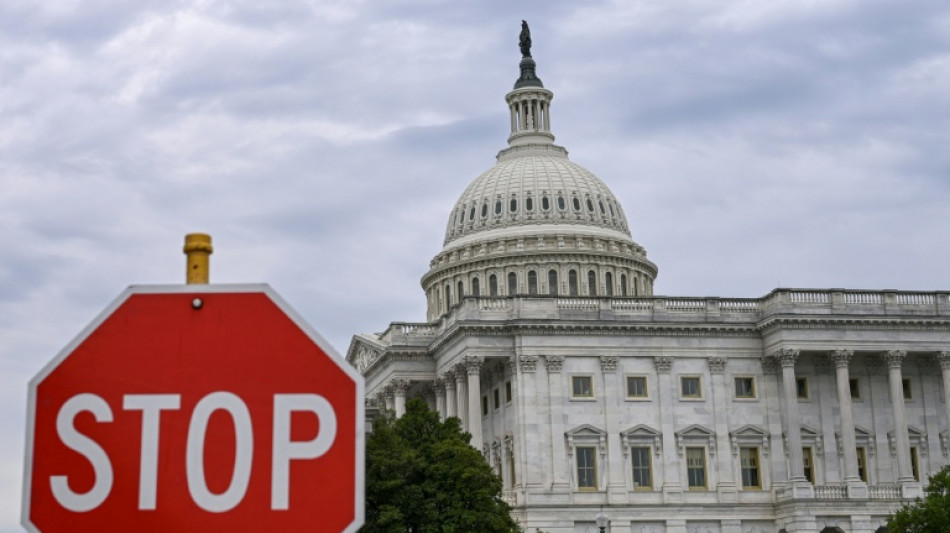
AI political ads warp reality ahead of US midterms / Photo: Alex WROBLEWSKI - AFP

 London
 17 °C
17 °C

 Manchester
16 °C
Manchester
16 °C
 Glasgow
 7 °C
7 °C
 Dublin
15 °C
Dublin
15 °C
 Belfast
 14 °C
14 °C
 Washington
15 °C
Washington
15 °C
 Denver
19 °C
Denver
19 °C
 Atlanta
25 °C
Atlanta
25 °C
 Dallas
32 °C
Dallas
32 °C
 Houston Texas
 31 °C
31 °C
 New Orleans
 28 °C
28 °C
 El Paso
19 °C
El Paso
19 °C
 Phoenix
33 °C
Phoenix
33 °C
 Los Angeles
22 °C
San Diego
22 °C
San Francisco
15 °C
Chicago
17 °C
Minneapolis
13 °C
Seattle
17 °C
Portland
19 °C
Salt Lake City
17 °C
Las Vegas
30 °C
Miami
26 °C
Jacksonville
26 °C
San Antonio
30 °C
Bermuda
29 °C
Nassau
16 °C
Iqaluit
4 °C
Yellowknife
9 °C
Anchorage
Los Angeles
22 °C
San Diego
22 °C
San Francisco
15 °C
Chicago
17 °C
Minneapolis
13 °C
Seattle
17 °C
Portland
19 °C
Salt Lake City
17 °C
Las Vegas
30 °C
Miami
26 °C
Jacksonville
26 °C
San Antonio
30 °C
Bermuda
29 °C
Nassau
16 °C
Iqaluit
4 °C
Yellowknife
9 °C
Anchorage
 11 °C
Fairbanks
7 °C
Barrow
11 °C
Fairbanks
7 °C
Barrow
 2 °C
Calgary
14 °C
Edmonton
19 °C
Winnipeg
14 °C
Goose Bay
11 °C
Halifax
12 °C
Boston
11 °C
Ottawa
9 °C
Toronto
13 °C
Detroit
15 °C
Cleveland
15 °C
New York
17 °C
Baltimore
15 °C
Philadelphia
17 °C
Nuuk (Godthåb)
2 °C
Hong Kong
2 °C
Calgary
14 °C
Edmonton
19 °C
Winnipeg
14 °C
Goose Bay
11 °C
Halifax
12 °C
Boston
11 °C
Ottawa
9 °C
Toronto
13 °C
Detroit
15 °C
Cleveland
15 °C
New York
17 °C
Baltimore
15 °C
Philadelphia
17 °C
Nuuk (Godthåb)
2 °C
Hong Kong
 30 °C
Singapore
30 °C
Melbourne
27 °C
Canberra
19 °C
Adelaide
23 °C
Darwin
30 °C
Singapore
30 °C
Melbourne
27 °C
Canberra
19 °C
Adelaide
23 °C
Darwin
 32 °C
Perth
19 °C
Fort Worth
31 °C
Honolulu
28 °C
Sydney
19 °C
Johannesburg
12 °C
Dubai
32 °C
Mumbai
28 °C
Zürich
9 °C
Tokyo
20 °C
Seoul
27 °C
Delhi
26 °C
Beijing
25 °C
Riyadh
27 °C
Prague
9 °C
Pennsylvania
14 °C
Valletta
24 °C
Manama
32 °C
Warsaw
11 °C
Stockholm
7 °C
32 °C
Perth
19 °C
Fort Worth
31 °C
Honolulu
28 °C
Sydney
19 °C
Johannesburg
12 °C
Dubai
32 °C
Mumbai
28 °C
Zürich
9 °C
Tokyo
20 °C
Seoul
27 °C
Delhi
26 °C
Beijing
25 °C
Riyadh
27 °C
Prague
9 °C
Pennsylvania
14 °C
Valletta
24 °C
Manama
32 °C
Warsaw
11 °C
Stockholm
7 °C
A political ad depicts a US Senate hopeful remarking on God and gender while scrawling in a Bible with a crayon. But he never filmed the clip: it is yet another AI-generated video pushed by a rival ahead of the midterm elections.
AI-created ads -- placing politicians in fictitious situations -- have proliferated ahead of the November elections, a largely unregulated form of political communication that is increasingly being adopted despite a broader backlash against the technology.
Earlier this month, Republican Senate nominee in Texas, Ken Paxton, posted an AI-generated ad on X depicting his Democratic rival James Talarico saying: "Look, I always think of myself as a Christian who hates Christianity."
The lifelike clip shows Talarico writing "let there be six genders" in a Bible with multicolored crayons. Overlaid text reads: "James Talarico wrong for Texas" and "wrong for America," while a QR code seeks donations for Paxton.
Talarico condemned the ad, saying "they are lying about a candidate in this race" and that he favored a ban on deepfakes in political campaigns.
"These AI deepfake ads don't add anything to our civic discourse," he told NBC News. "They don't do anything to elucidate the choice that's in front of voters."
The ad came a few weeks after a conservative nonprofit aligned with President Donald Trump released another AI clip depicting Talarico parodying Julie Andrews's character in the hit classic Sound of Music, dressed in a jumper-style bodice and skirt and singing "My favorite things."
- 'Erodes trust' -
The proliferation of AI ads in US federal, state and local elections comes against the backdrop of declining trust in the technology.
"The concern might be not that people believe the ads but the ads and general AI slop content risk people doubting everything," Sarah Kreps, director of the Tech Policy Institute at Cornell University, told AFP.
"People might just dismiss real content as another deepfake, which erodes trust, causing voters to tune out rather than dig deeper for authenticity."
The Wesleyan Media Project, which tracks election ad spending, has identified at least 164 political ads nationwide so far this year that were "generated or enhanced through the use of AI." It estimates that the ads cost just under $80 million.
That tally of ads -- sponsored by both Republicans and Democrats and splashed across airwaves and social media -- was an undercount.
The group said it was difficult to definitively know whether AI tools had been used in some ads, especially as there were no federal mandates that political ads carry an AI disclaimer.
"Just the knowledge that the tech has become good enough to deceive the average viewer combined with the fact that it is being used in election communication is enough to undermine voters trust in the broader election communication ecosystem," Ilana Beller, from the nonprofit advocacy group Public Citizen, told AFP.
- 'Modern political cartoon' -
However, cheap and widely available AI tools help save on the often exorbitant costs of producing ads.
"There's no need to pay for a camera crew or hire actors to create good-looking content on a short timeline. They also open the door to creativity -- no special effects editors required," Isabel Linzer, from the nonpartisan Center for Democracy & Technology, told AFP.
In many cases, Linzer said, satirical or humorous AI ads serve as "the modern political cartoon."
"A worthy question is whether using AI in political ads is a stunt that will boost a candidate through generating substantial free media attention," she added.
The AI-generated ads could help candidates with goals such as fundraising and mobilizing supporters, but there is scant evidence that they influence how people vote, said Scott Babwah Brennen, director of the Center on Technology Policy at New York University.
"Much of this does seem to be effective in gaining attention, though it is unclear if that will translate into electoral success," Babwah Brennen told AFP.
"As public sentiment grows against AI, it is possible that AI-generated negative attack ads could backfire -- that is decreasing assessments of the producer of the ad."
D.Mayer--BlnAP