McDonald's, bus station convert into Venezuela quake clinics / Photo: Miguel MEDINA - AFP

 London
 19 °C
19 °C
 Manchester
17 °C
Manchester
17 °C
 Glasgow
 17 °C
17 °C
 Dublin
17 °C
Dublin
17 °C
 Belfast
16 °C
Belfast
16 °C
 Washington
 20 °C
20 °C
 Denver
13 °C
Denver
13 °C
 Atlanta
23 °C
Atlanta
23 °C
 Dallas
27 °C
Dallas
27 °C
 Houston Texas
26 °C
Houston Texas
26 °C
 New Orleans
28 °C
New Orleans
28 °C
 El Paso
21 °C
El Paso
21 °C
 Phoenix
29 °C
Phoenix
29 °C
 Los Angeles
 21 °C
San Diego
20 °C
San Francisco
15 °C
Chicago
19 °C
Minneapolis
21 °C
San Diego
20 °C
San Francisco
15 °C
Chicago
19 °C
Minneapolis
 11 °C
Seattle
11 °C
Seattle
 11 °C
Portland
12 °C
Salt Lake City
19 °C
Las Vegas
27 °C
Miami
29 °C
Jacksonville
27 °C
San Antonio
25 °C
Bermuda
28 °C
Nassau
19 °C
Iqaluit
3 °C
Yellowknife
11 °C
Portland
12 °C
Salt Lake City
19 °C
Las Vegas
27 °C
Miami
29 °C
Jacksonville
27 °C
San Antonio
25 °C
Bermuda
28 °C
Nassau
19 °C
Iqaluit
3 °C
Yellowknife
 -1 °C
Anchorage
-1 °C
Anchorage
 11 °C
Fairbanks
9 °C
Barrow
-1 °C
Calgary
3 °C
Edmonton
24 °C
Winnipeg
6 °C
Goose Bay
18 °C
Halifax
15 °C
Boston
16 °C
Ottawa
17 °C
Toronto
18 °C
Detroit
21 °C
Cleveland
23 °C
New York
19 °C
Baltimore
19 °C
Philadelphia
11 °C
Fairbanks
9 °C
Barrow
-1 °C
Calgary
3 °C
Edmonton
24 °C
Winnipeg
6 °C
Goose Bay
18 °C
Halifax
15 °C
Boston
16 °C
Ottawa
17 °C
Toronto
18 °C
Detroit
21 °C
Cleveland
23 °C
New York
19 °C
Baltimore
19 °C
Philadelphia
 19 °C
Nuuk (Godthåb)
5 °C
Hong Kong
29 °C
Singapore
30 °C
Melbourne
26 °C
Canberra
4 °C
Adelaide
10 °C
Darwin
25 °C
Perth
22 °C
Fort Worth
26 °C
Honolulu
25 °C
Sydney
13 °C
Johannesburg
27 °C
Dubai
37 °C
Mumbai
30 °C
Zürich
19 °C
Tokyo
20 °C
Seoul
20 °C
Delhi
35 °C
Beijing
21 °C
Riyadh
40 °C
Prague
25 °C
Pennsylvania
17 °C
Valletta
29 °C
Manama
37 °C
Warsaw
24 °C
Stockholm
17 °C
19 °C
Nuuk (Godthåb)
5 °C
Hong Kong
29 °C
Singapore
30 °C
Melbourne
26 °C
Canberra
4 °C
Adelaide
10 °C
Darwin
25 °C
Perth
22 °C
Fort Worth
26 °C
Honolulu
25 °C
Sydney
13 °C
Johannesburg
27 °C
Dubai
37 °C
Mumbai
30 °C
Zürich
19 °C
Tokyo
20 °C
Seoul
20 °C
Delhi
35 °C
Beijing
21 °C
Riyadh
40 °C
Prague
25 °C
Pennsylvania
17 °C
Valletta
29 °C
Manama
37 °C
Warsaw
24 °C
Stockholm
17 °C
Four bags of IV fluid hang from the ceiling of a McDonald's converted into a clinic in the aftermath of the two earthquakes in Venezuela, where thousands are flocking to makeshift health centers in the disaster's epicenter.
The double earthquake, measuring 7.2 and 7.5 in magnitude, struck La Guaira state, which lacks the capacity for mass hospital care after widespread destruction, scores of collapsed buildings and more than 2,600 deaths.
A McDonald's restaurant in the hard-hit Caraballeda area is receiving dozens of people with "hypertensive crises, anxiety attacks, and diarrheal symptoms," Karlys Figueroa, a 33-year-old surgeon and volunteer in disaster relief efforts, told AFP.
The facility has become one of the makeshift field hospitals, with a triage area, a pharmacy, a storage area, and spaces for psychological and veterinary care.
More than 30 doctors like Figueroa are treating the victims there.
At the counter where the famous hamburgers were once served, donated arepas and sandwiches are now handed out, and the ice cream parlor has been transformed into a shelter for rescued animals.
Nearly 4,000 patients have been treated at another makeshift health center set up inside a bus terminal in Catia La Mar.
The first victims were taken to just two hospitals, which were overwhelmed within hours after one of Latin America's worst earthquake disasters.
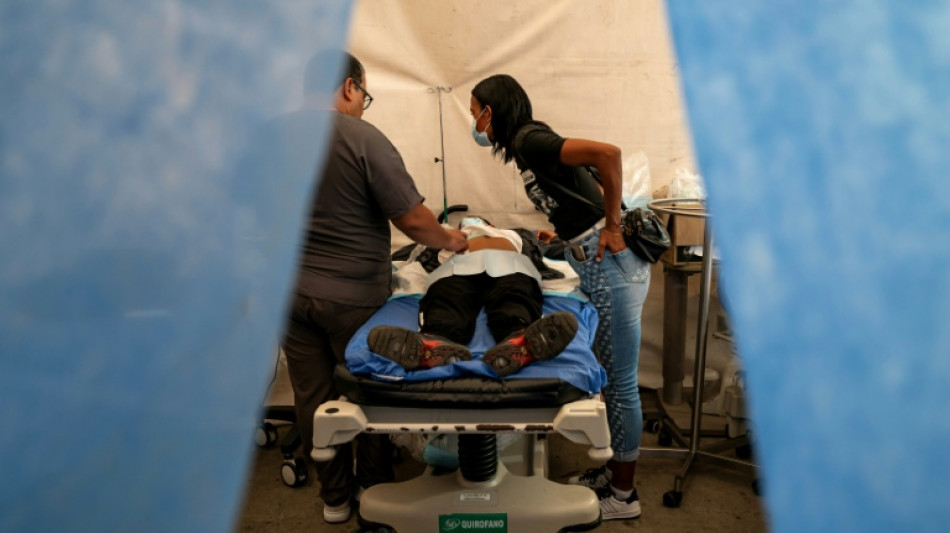
Iverson Medina received treatment on a stretcher inside a large tent at the bus station, now furnished out with medical equipment provided by private funds.
A splint covered his right leg and left ankle, which were injured after spending 16 hours trapped in the rubble of his building.
"I was very scared because I thought they weren't going to rescue me. It was only after I saw the firefighters and everything that I calmed down," the 13-year-old told AFP, accompanied by his sister.
Medina and a cousin survived, but he witnessed the deaths of his grandmother and another cousin.
More than 2,600 people have died so far, according to official figures.
- 'Dead in street' -
Medina is one of the more than 12,600 injured in the quake, according to authorities.
"It was horrible, dead bodies in the street, the morgue couldn't keep up, the dead were out in the street, the decomposition," said Maria Jose Pino, an obstetrician-gynecologist who works at the health center in the station.
Pino also survived the earthquake. She said that a seismic alert on her cell phone saved her life by allowing her to get to the exit of her home. With an injured leg, she has been attending to patients nonstop since the beginning of the disaster response.
"I feel that despite what I did, it's like I didn't do anything,” she said. "There weren't enough hands, there wasn't enough help."
The UN has said the risk of epidemic diseases is growing as the displaced fill shelters following the total collapse of more than 150 buildings in La Guaira.
In recent days, doctors have treated patients with diarrhea, dysentery, abdominal pain, nausea, and vomiting, which are raising alarms at the facility, said Antonio Olaizola, a medical doctor.
"We already have infectious processes stemming from this event," he said. "The issue of overcrowding right now is critical for these types of infectious diseases."
G.Hauser--BlnAP