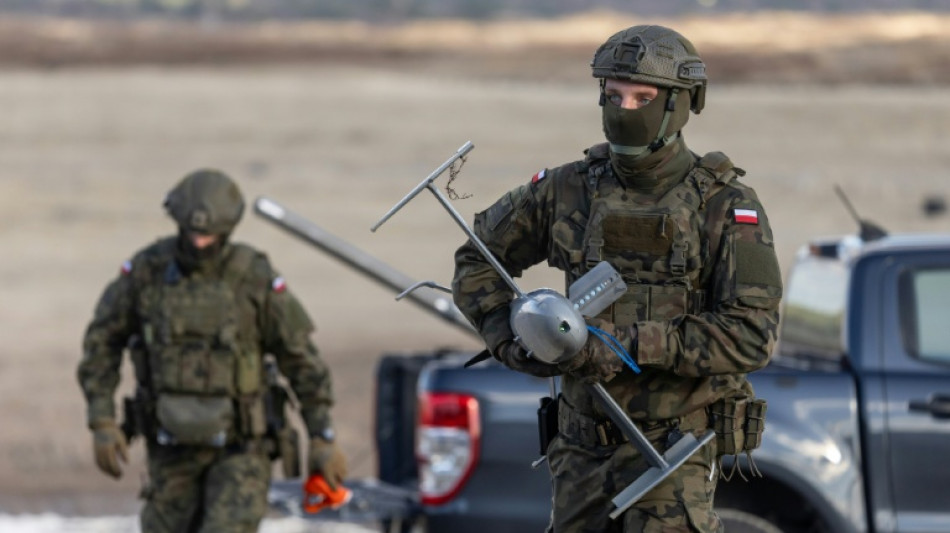
Poland reels from row over EU loans to fend off Russia / Photo: Wojtek RADWANSKI - AFP

 London
 14 °C
14 °C

 Manchester
 11 °C
11 °C
 Glasgow
 11 °C
11 °C
 Dublin
15 °C
Dublin
15 °C
 Belfast
15 °C
Belfast
15 °C
 Washington
 14 °C
14 °C
 Denver
 28 °C
28 °C
 Atlanta
24 °C
Atlanta
24 °C
 Dallas
34 °C
Dallas
34 °C
 Houston Texas
30 °C
Houston Texas
30 °C
 New Orleans
29 °C
New Orleans
29 °C
 El Paso
32 °C
El Paso
32 °C
 Phoenix
37 °C
Phoenix
37 °C
 Los Angeles
30 °C
San Diego
28 °C
San Francisco
19 °C
Chicago
17 °C
Minneapolis
15 °C
Seattle
17 °C
Portland
20 °C
Salt Lake City
26 °C
Las Vegas
Los Angeles
30 °C
San Diego
28 °C
San Francisco
19 °C
Chicago
17 °C
Minneapolis
15 °C
Seattle
17 °C
Portland
20 °C
Salt Lake City
26 °C
Las Vegas
 35 °C
Miami
29 °C
Jacksonville
24 °C
San Antonio
35 °C
Miami
29 °C
Jacksonville
24 °C
San Antonio
 34 °C
Bermuda
26 °C
Nassau
14 °C
Iqaluit
3 °C
Yellowknife
7 °C
Anchorage
11 °C
Fairbanks
13 °C
Barrow
3 °C
Calgary
34 °C
Bermuda
26 °C
Nassau
14 °C
Iqaluit
3 °C
Yellowknife
7 °C
Anchorage
11 °C
Fairbanks
13 °C
Barrow
3 °C
Calgary
 6 °C
Edmonton
23 °C
Winnipeg
17 °C
Goose Bay
18 °C
Halifax
14 °C
Boston
14 °C
Ottawa
22 °C
Toronto
20 °C
Detroit
19 °C
Cleveland
18 °C
New York
15 °C
Baltimore
14 °C
Philadelphia
16 °C
Nuuk (Godthåb)
1 °C
Hong Kong
27 °C
Singapore
28 °C
Melbourne
25 °C
Canberra
10 °C
Adelaide
13 °C
Darwin
26 °C
Perth
14 °C
Fort Worth
34 °C
Honolulu
26 °C
Sydney
16 °C
Johannesburg
16 °C
Dubai
32 °C
Mumbai
27 °C
Zürich
13 °C
Tokyo
19 °C
Seoul
17 °C
Delhi
22 °C
Beijing
17 °C
Riyadh
30 °C
Prague
11 °C
Pennsylvania
15 °C
Valletta
20 °C
Manama
33 °C
Warsaw
11 °C
Stockholm
10 °C
6 °C
Edmonton
23 °C
Winnipeg
17 °C
Goose Bay
18 °C
Halifax
14 °C
Boston
14 °C
Ottawa
22 °C
Toronto
20 °C
Detroit
19 °C
Cleveland
18 °C
New York
15 °C
Baltimore
14 °C
Philadelphia
16 °C
Nuuk (Godthåb)
1 °C
Hong Kong
27 °C
Singapore
28 °C
Melbourne
25 °C
Canberra
10 °C
Adelaide
13 °C
Darwin
26 °C
Perth
14 °C
Fort Worth
34 °C
Honolulu
26 °C
Sydney
16 °C
Johannesburg
16 °C
Dubai
32 °C
Mumbai
27 °C
Zürich
13 °C
Tokyo
19 °C
Seoul
17 °C
Delhi
22 °C
Beijing
17 °C
Riyadh
30 °C
Prague
11 °C
Pennsylvania
15 °C
Valletta
20 °C
Manama
33 °C
Warsaw
11 °C
Stockholm
10 °C
A spat over huge EU defence loans has erupted into trench warfare between Poland's pro-European government and nationalist president.
The fiery row over multi-billion-euro plans to beef up its military is unprecedented in a country where there is usually consensus on defence.
With war raging in neighbouring Ukraine, and Russia and Belarus just across the border, frontline Poland has upped its defence budget to 4.8 percent of its GDP, one of the highest in NATO.
The government is counting on nearly 44 billion euros in European loans from the Security Action For Europe (SAFE) scheme, which it says is a big win for Poland, set to get nearly a third of the total 150-billion-euro pot.
- 'Generations' of debt -
The deal has already passed through parliament, but nationalist President Karol Nawrocki -- who could veto it -- arguing it will allow Brussels to exert undue pressure on Warsaw through monitoring how funds will be allocated.
He claims SAFE could also saddle Poland with debt "for generations" and has instead floated a counter project, known as "SAFE 0%".
By using central bank funds instead, Poland would not be burdened with loans or interest payments, the president argues.
But many doubt how this could work, with some questioning Nawrocki's motives.
"Poland is the only country along NATO's Eastern flank where there is a debate on whether to accept the funds offered under the European programme," liberal Polish daily Gazeta Wyborcza argued on Wednesday, describing the debate as a "scandalous political controversy" fanned by the former PiS government, to which the president is close.
- Under 'German boot' -
Political scientist Jaroslaw Kuisz told AFP that Nawrocki wanted to stop Prime Minister Tusk reaping the economic boost the money would bring before the 2027 general election.
"The president wants... to harm the prime minister as much as possible so that he cannot reap the benefits of his immense financial success" in getting Poland such a big slice of the cake.
Companies, particularly in the arms sector, will "within a year have enormous sums of money at their disposal that will be redistributed," he said.
"The president's primary objective is to bring down the Tusk government and prepare for a change of power" in 2027, Wojciech Przybylski of the Visegrad think tank Insight told AFP.
Poland's eurosceptic nationalist opposition paints itself as a close and indispensable ally of Washington.
SAFE, its members argue, would discourage US arms companies from forging arms contracts with Poland, because its funds must be spent mostly in Europe.
PiS chairman Jaroslaw Kaczynski argued the agreement "was intended to bind (Poland) with various dependencies" and would place it "under the German boot".
But the plan is backed by 52 percent of Poles, with only 35 against it, according to a poll by Poland's Centre for Public Opinion Research.
President Nawrocki, who is in an uneasy cohabitation with the ruling centrist coalition, has a reputation among his critics as a "veto machine" unwilling to reach across the aisle.
Rather than outright reject the bill, he thus responded with the "sovereign" alternative, which was jointly proposed with Poland's central bank governor -- another PiS ally.
Under the president's proposed bill, defence financing would be based on revaluing profits derived from the central bank's gold and foreign currency reserves.
But the government said this is unrealistic, with the central bank making a loss for several years.
Nawrocki's proposal "does not provide money, but creates yet another body, a council, bureaucracy, and dozens of unnecessary regulations," Prime Minister Tusk said.
He also vowed that in the event of a presidential veto, he would implement a "Plan B" to make use of the European funds regardless of the president.
M.Wilke--BlnAP