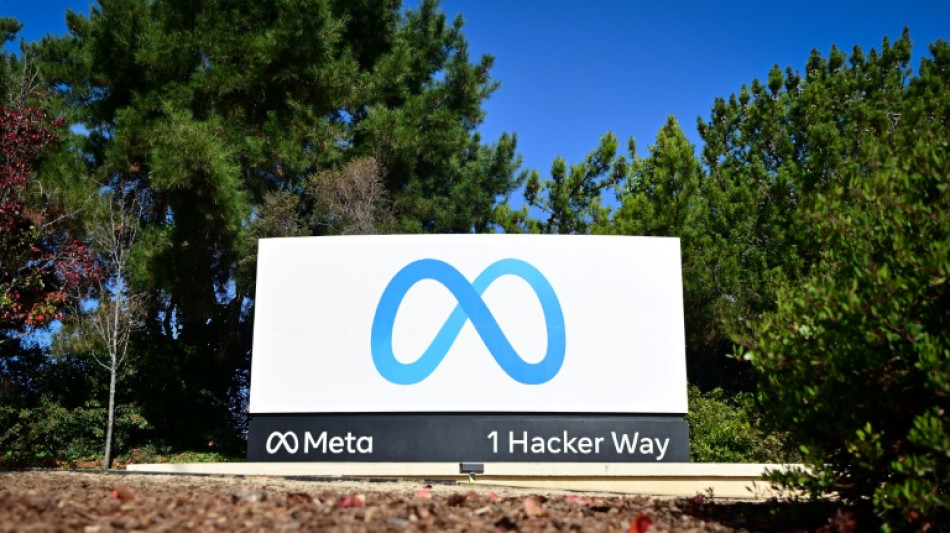
Latin America could see fresh disinformation after Meta changes / Photo: JOSH EDELSON - AFP/File

 London
 19 °C
19 °C
 Manchester
15 °C
Manchester
15 °C
 Glasgow
17 °C
Glasgow
17 °C
 Dublin
19 °C
Dublin
19 °C
 Belfast
18 °C
Belfast
18 °C
 Washington
 30 °C
30 °C
 Denver
 24 °C
24 °C
 Atlanta
 30 °C
30 °C
 Dallas
34 °C
Dallas
34 °C
 Houston Texas
32 °C
Houston Texas
32 °C
 New Orleans
 28 °C
28 °C
 El Paso
28 °C
El Paso
28 °C
 Phoenix
35 °C
Phoenix
35 °C
 Los Angeles
30 °C
San Diego
30 °C
San Francisco
22 °C
Chicago
24 °C
Minneapolis
24 °C
Seattle
16 °C
Portland
19 °C
Salt Lake City
24 °C
Las Vegas
34 °C
Miami
32 °C
Jacksonville
32 °C
San Antonio
31 °C
Bermuda
26 °C
Nassau
29 °C
Iqaluit
5 °C
Yellowknife
14 °C
Anchorage
9 °C
Fairbanks
8 °C
Barrow
4 °C
Calgary
12 °C
Edmonton
27 °C
Winnipeg
21 °C
Goose Bay
23 °C
Halifax
29 °C
Boston
28 °C
Ottawa
21 °C
Toronto
25 °C
Detroit
26 °C
Cleveland
26 °C
New York
29 °C
Baltimore
30 °C
Philadelphia
30 °C
Nuuk (Godthåb)
5 °C
Hong Kong
Los Angeles
30 °C
San Diego
30 °C
San Francisco
22 °C
Chicago
24 °C
Minneapolis
24 °C
Seattle
16 °C
Portland
19 °C
Salt Lake City
24 °C
Las Vegas
34 °C
Miami
32 °C
Jacksonville
32 °C
San Antonio
31 °C
Bermuda
26 °C
Nassau
29 °C
Iqaluit
5 °C
Yellowknife
14 °C
Anchorage
9 °C
Fairbanks
8 °C
Barrow
4 °C
Calgary
12 °C
Edmonton
27 °C
Winnipeg
21 °C
Goose Bay
23 °C
Halifax
29 °C
Boston
28 °C
Ottawa
21 °C
Toronto
25 °C
Detroit
26 °C
Cleveland
26 °C
New York
29 °C
Baltimore
30 °C
Philadelphia
30 °C
Nuuk (Godthåb)
5 °C
Hong Kong
 26 °C
Singapore
29 °C
Melbourne
31 °C
Canberra
26 °C
Singapore
29 °C
Melbourne
31 °C
Canberra
 4 °C
Adelaide
10 °C
Darwin
26 °C
Perth
15 °C
Fort Worth
34 °C
Honolulu
25 °C
Sydney
10 °C
Johannesburg
20 °C
Dubai
37 °C
Mumbai
28 °C
Zürich
18 °C
Tokyo
19 °C
Seoul
18 °C
Delhi
30 °C
Beijing
20 °C
Riyadh
40 °C
Prague
18 °C
Pennsylvania
28 °C
Valletta
32 °C
Manama
36 °C
Warsaw
17 °C
Stockholm
13 °C
4 °C
Adelaide
10 °C
Darwin
26 °C
Perth
15 °C
Fort Worth
34 °C
Honolulu
25 °C
Sydney
10 °C
Johannesburg
20 °C
Dubai
37 °C
Mumbai
28 °C
Zürich
18 °C
Tokyo
19 °C
Seoul
18 °C
Delhi
30 °C
Beijing
20 °C
Riyadh
40 °C
Prague
18 °C
Pennsylvania
28 °C
Valletta
32 °C
Manama
36 °C
Warsaw
17 °C
Stockholm
13 °C
As Meta moves to scrap fact-checking for Facebook and Instagram posts across Latin America, experts predict the change will lead to sharply degraded public debate in the region.
The tech giant announced Wednesday it was testing crowdsourcing in 16 Latin American countries as an alternative to professional verification, amid accusations from some conservatives that such checks amount to censorship.
Meta's Community Notes is a system modeled on a similar program at Elon Musk's X, allowing users themselves to add context to potentially misleading content.
Meta did not disclose when it plans to make the overhaul official. For now, accredited newsrooms and specialized agencies will continue to fact-check misleading content on Facebook, Instagram and Threads.
The change, already in force in the United States, has rattled social media experts.
"The consequences could be considerable, making it easier for misinformation to spread more quickly," said Alejandro Martin del Campo, a media expert at Mexico's Tecnologico de Monterrey.
Around 14 agencies in the region are part of Meta's global fact-checking program launched in 2016, according to the LatamChequea consortium. AFP is part of the program, providing fact-checking services in 26 languages.
In a statement Thursday, LatamChequea asked Mark Zuckerberg's company to rethink its decision.
"Community Notes are not enough in contexts of high disinformation," it said, calling on Meta "to complement, not replace, independent verification."
Social media users will not necessarily apply "the methodical and journalistic standards" of professional fact-checkers, said Carlos Rodriguez, a professor at Colombia's Universidad de La Sabana.
That is likely to lead to a drop in the quality of information available to social media users, several experts told AFP.
As polarization and disinformation spread, content relying on consensus between users "can devolve into worrying situations," said Ramon Salaverria, professor at the University of Navarra in Spain.
- Brazil's firm hand -
Portuguese-speaking Brazil, the region's largest market for Meta's platforms, was excluded from the crowdsourcing trial.
Ivan Paganotti, a professor at the University of Sao Paulo, links this to Brazil's much tougher stance on digital platforms.
The South American nation, which will hold presidential elections in October, has shown much more willingness to regulate Big Tech than its neighbors.
"Brazil has regulations that have expanded and forced platforms to develop control and verification mechanisms," Paganotti said, adding that this contrasts with a dearth of legislation elsewhere in the region.
In 2024, Brazil's Supreme Court blocked X from operating for 40 days until the platform complied with court orders to remove accounts accused of spreading misinformation.
And in June, in an unprecedented move in Latin America, a Brazilian court tightened regulations on digital platforms regarding their role in spreading disinformation and hate speech.
- AI impact -
Meta is moving to upend its fact-checking operations just as generative artificial intelligence has muddied the waters of the digital world.
The emergence of "an entire community (of users) that helps provide context" initially seemed positive to Marco Benalcazar, director of the Alan Turing Artificial Intelligence and Vision Research Laboratory at Ecuador's National Polytechnic School.
But he is troubled by studies showing that around half of users can't tell at a glance whether content is real -- a cohort that will grow "as generative AI tools advance."
Martin del Campo agreed that generative AI "will be a challenge."
"Basic digital literacy skills are now more indispensable than ever," he said.
Studies have shown that fact-checking can help curb the spread of misinformation and help users identify false narratives.
However, analysts expect other social media platforms to follow Meta's lead in a bid to cut costs and accommodate criticism of fact-checking.
Meta and X are moving away from verification "without facing opposition from governments, their users or public opinion," said Rafael Rubio, co-director of the Complutense University of Madrid's Disinformation Observatory.
This reality "will probably encourage other (platforms) to do the same," he said.
S.Roth--BlnAP