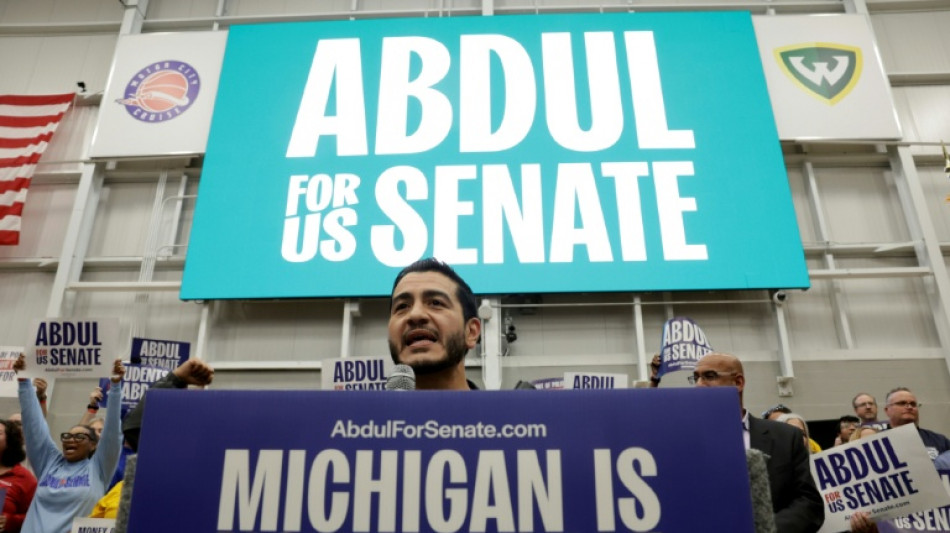
AI ad blitz distorts US midterms / Photo: JEFF KOWALSKY - AFP

 London
 9 °C

 Manchester
 9 °C
 Glasgow
 8 °C
 Dublin
9 °C
 Belfast
8 °C
 Washington
 12 °C
 Denver
11 °C
 Atlanta
14 °C
 Dallas
22 °C
 Houston Texas
22 °C
 New Orleans
20 °C
 El Paso
23 °C
 Phoenix
24 °C
 Los Angeles
22 °C
San Diego
22 °C
San Francisco
18 °C
Chicago
18 °C
Minneapolis
11 °C
Seattle
11 °C
Portland
11 °C
Salt Lake City
11 °C
Las Vegas
21 °C
Miami
24 °C
Jacksonville
 20 °C
San Antonio
 24 °C
Bermuda
 21 °C
Nassau
13 °C
Iqaluit
 -2 °C
Yellowknife
2 °C
Anchorage
 6 °C
Fairbanks
1 °C
Barrow
1 °C
Calgary
0 °C
Edmonton
15 °C
Winnipeg
1 °C
Goose Bay
9 °C
Halifax
8 °C
Boston
10 °C
Ottawa
12 °C
Toronto
14 °C
Detroit
13 °C
Cleveland
12 °C
New York
14 °C
Baltimore
11 °C
Philadelphia
12 °C
Nuuk (Godthåb)
-5 °C
Hong Kong
 27 °C
Singapore
28 °C
Melbourne
24 °C
Canberra
 18 °C
Adelaide
15 °C
Darwin
32 °C
Perth
18 °C
Fort Worth
22 °C
Honolulu
 27 °C
Sydney
20 °C
Johannesburg
18 °C
Dubai
29 °C
Mumbai
29 °C
Zürich
8 °C
Tokyo
19 °C
Seoul
18 °C
Delhi
17 °C
Beijing
12 °C
Riyadh
24 °C
Prague
7 °C
Pennsylvania
9 °C
Valletta
20 °C
Manama
30 °C
Warsaw
8 °C
Stockholm
11 °C
The video looks hyper-real, depicting a US Senate candidate laughing at cards that read "Death to America" and "Celebrate 9/11." But it is part of a multimillion-dollar blitz of AI-generated political ads ahead of the midterm elections.
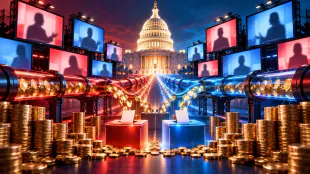
Reality-bending deepfake ads -- dubbed AI "slopaganda" by researchers and used by both sides of the political aisle to target rivals -- are proliferating across the airwaves and social media ahead of the November 3 vote.
"His family values are wrong for Michigan," said one ad that portrays Democratic candidate Abdul El-Sayed playing a board game with two people wearing traditional kaffiyehs, the checkered Arab scarves.
The lifelike ad features cards bearing incendiary statements and depicts a fabricated family photo of the Muslim candidate with four women wearing head-to-toe veils.
"Destruction of Israel and the West isn't just a game for them," a voiceover says. "It's a mission."
Front Line Action, a political action committee aligned with Republican Senator Ted Cruz, was behind the video. It spent over $92,000 on advertising opposing El-Sayed, according to a filing with the Federal Election Commission.
The ad carries a disclaimer that it was "created in whole or in part with the use of artificial intelligence."
Most AI-created ads do not carry such a label, researchers say, further distorting an information landscape already plagued by election disinformation.
- 'Slippery slope' -
The Wesleyan Media Project, which tracks election ad spending, has so far identified 220 political ads nationwide -- most sponsored by Republicans -- that were generated at least in part using AI tools.
It estimates that the ads cost more than $137 million. By comparison, it identified less than $50,000 in spending on AI-generated ads in the 2024 election cycle.
Eighty-one percent of the AI-created ads were sponsored by Republican candidates or groups, 12 percent by Democrats, and the remainder by independent candidates or groups, it added.
"AI is making its way into the 2026 midterms in a big way this year," said Erika Franklin Fowler, co-director of the Wesleyan Media Project.
She added that only 27 percent of the ads carried an AI disclaimer, calling the trend "problematic."
The group said its ads tally was almost certainly an undercount as it was difficult to determine definitively whether AI tools had been used in their creation.
There were no federal mandates that political ads carry an AI disclaimer, though some states have legislated to restrict the use of AI or require disclosures.
"It is deeply troubling to see these deepfake videos used to fabricate political advertising," Democratic Senator Jon Ossoff told C-SPAN last month.
"And it's a slippery slope toward the destruction of truth in political debate."
- 'Mobilizing voters' -
Ossoff's comment came as he demanded the removal of a fabricated ad -- which carried no AI disclosure -- portraying him receiving beauty treatments at a salon and covering up his "ugly record."
The Senate Leadership Fund, a political action committee that describes itself as "solely dedicated to protecting and expanding the Republican Senate majority," was behind the ad.
The proliferation of such ads in the midterms -- which the London-based Institute for Strategic Dialogue called the first US election in which AI is built into every major social media platform -- comes against the backdrop of declining trust in the technology.
In a recent survey by the nonprofit AAPC Foundation, 73 percent said it was "unacceptable" for a political campaign to use AI to generate images or video in an ad.
Ninety-five percent said it was unacceptable to "create a video of an opponent saying something they never said."
But researchers played down concerns that the ads could influence election results.
"Political slopaganda is likely more effective at mobilizing voters or raising money than it is in impacting candidate selection," New York University's Center on Tech Policy said in a research report earlier this month.
"Like digital memes, there may be limits to its attentional staying power, especially as we become more and more inundated with AI slop."
H.Bauer--BlnAP