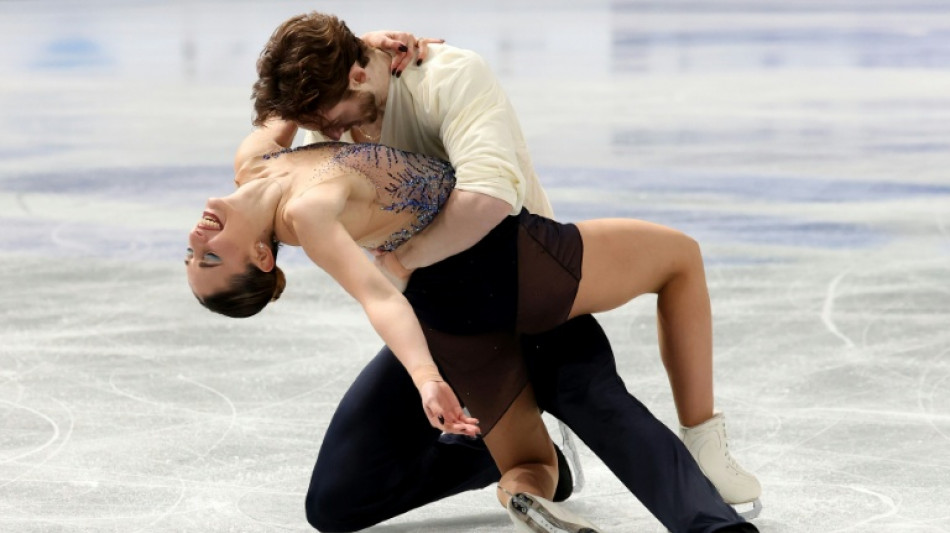
'True emotion': Olympic skaters create magic step by step / Photo: PAUL MILLER - AFP

 London
 7 °C
7 °C

 Manchester
6 °C
Manchester
6 °C
 Glasgow
 13 °C
13 °C
 Dublin
 7 °C
7 °C
 Belfast
6 °C
Belfast
6 °C
 Washington
15 °C
Washington
15 °C
 Denver
18 °C
Denver
18 °C
 Atlanta
16 °C
Atlanta
16 °C
 Dallas
21 °C
Dallas
21 °C
 Houston Texas
26 °C
Houston Texas
26 °C
 New Orleans
 25 °C
25 °C
 El Paso
23 °C
El Paso
23 °C
 Phoenix
32 °C
Phoenix
32 °C
 Los Angeles
27 °C
San Diego
26 °C
San Francisco
16 °C
Chicago
17 °C
Minneapolis
14 °C
Seattle
13 °C
Portland
17 °C
Salt Lake City
20 °C
Las Vegas
29 °C
Miami
26 °C
Jacksonville
25 °C
San Antonio
22 °C
Bermuda
25 °C
Nassau
15 °C
Iqaluit
Los Angeles
27 °C
San Diego
26 °C
San Francisco
16 °C
Chicago
17 °C
Minneapolis
14 °C
Seattle
13 °C
Portland
17 °C
Salt Lake City
20 °C
Las Vegas
29 °C
Miami
26 °C
Jacksonville
25 °C
San Antonio
22 °C
Bermuda
25 °C
Nassau
15 °C
Iqaluit
 0 °C
Yellowknife
4 °C
Anchorage
6 °C
Fairbanks
1 °C
Barrow
-9 °C
Calgary
8 °C
Edmonton
16 °C
Winnipeg
7 °C
Goose Bay
14 °C
Halifax
12 °C
Boston
13 °C
Ottawa
12 °C
Toronto
14 °C
Detroit
15 °C
Cleveland
17 °C
New York
15 °C
Baltimore
14 °C
Philadelphia
14 °C
Nuuk (Godthåb)
3 °C
Hong Kong
29 °C
Singapore
32 °C
Melbourne
25 °C
Canberra
0 °C
Yellowknife
4 °C
Anchorage
6 °C
Fairbanks
1 °C
Barrow
-9 °C
Calgary
8 °C
Edmonton
16 °C
Winnipeg
7 °C
Goose Bay
14 °C
Halifax
12 °C
Boston
13 °C
Ottawa
12 °C
Toronto
14 °C
Detroit
15 °C
Cleveland
17 °C
New York
15 °C
Baltimore
14 °C
Philadelphia
14 °C
Nuuk (Godthåb)
3 °C
Hong Kong
29 °C
Singapore
32 °C
Melbourne
25 °C
Canberra
 19 °C
Adelaide
19 °C
Adelaide
 27 °C
Darwin
32 °C
Perth
19 °C
Fort Worth
21 °C
Honolulu
25 °C
Sydney
27 °C
Darwin
32 °C
Perth
19 °C
Fort Worth
21 °C
Honolulu
25 °C
Sydney
 20 °C
Johannesburg
15 °C
Dubai
35 °C
Mumbai
34 °C
Zürich
15 °C
Tokyo
20 °C
Johannesburg
15 °C
Dubai
35 °C
Mumbai
34 °C
Zürich
15 °C
Tokyo
 25 °C
Seoul
24 °C
Delhi
28 °C
Beijing
24 °C
Riyadh
30 °C
Prague
10 °C
Pennsylvania
12 °C
Valletta
24 °C
Manama
33 °C
Warsaw
12 °C
Stockholm
11 °C
25 °C
Seoul
24 °C
Delhi
28 °C
Beijing
24 °C
Riyadh
30 °C
Prague
10 °C
Pennsylvania
12 °C
Valletta
24 °C
Manama
33 °C
Warsaw
12 °C
Stockholm
11 °C
Olympic figure skaters will perform for a matter of mere minutes at February's Milan-Cortina Games but the process of creating and honing their routines takes months of consideration and effort.
The concept, moves and music of a programme can make or break skaters' dreams of Olympic glory, and what is right for one can be a disaster for another.
"You have to choose what suits your strengths best, because that will inevitably score well with the judges," Canadian pairs skater Deanna Stellato-Dudek told AFP at last week's Grand Prix Final in Nagoya.
"That's what we've always done -- what feels best for us and then hoping that comes across to everybody."
Skaters typically work with a choreographer and coach to devise their short programme and free skate routines, which they will perform at every competition for a season.
Top choreographers like France's Benoit Richaud are in demand and can work with several skaters at the same time.
Richaud, a former skater himself who says his work is a calling from God, says "90 percent" of his skaters' routines comes from his ideas.
"I study them and the way they skate," said the 37-year-old, an instantly recognisable figure at competitions with his cool demeanour, bald head and round glasses.
"It's totally based on my feeling and personal emotion. I just know when I see a skater what kind of style, what kind of direction I should give them."
- Heavy rotation -
Richaud says his skaters and their coaches have the final say on a routine but he likes to "stay in control".
Other skaters prefer a more collaborative approach and bring their own ideas to the table.
"We have to be on the ice, we have to listen to the music a thousand times a day, so we need to like it," said Italian pairs skater Niccolo Macii.
"We need to have our idea on the ice. We need to feel what we do because we have to do it all the time."
A rule change brought in after the 2014 Winter Olympics allowed figure skaters to use music with lyrics for the first time, opening up new possibilities.
An eclectic mix could be heard at the Grand Prix Final, from pop hits by the Rolling Stones to movie soundtracks and classical numbers.
Picking the right music can make a difference in the judges' scores but purists like Richaud refuse to take that into consideration.
"My way of working is never to please anyone, it's only to do what I feel," he said.
"I am against working in a direction of thinking about 'I need the judge to like it' or 'I need people to like it'.
"I think it's not the way we create art, and it's not how we create true emotion."
- Constant evolution -
Others, like Italy's Macii, take a more pragmatic approach.
"We need to work with the mind of the judges," said the 30-year-old, who finished second in Nagoya with his partner Sara Conti.
"We need to find a way to express ourselves and to make the people like us -- it's a mix of being us on the ice and acting."
Macii is amused that people watching figure skating at the Olympics might think he and Conti are performing their routine in competition for the first time.
In reality it has been battle-tested since the start of the season, but even before it gets to that stage it is constantly evolving.
"Most of the time you start choreographing in April, May, and then you're not ready to compete until September, October," said Maxime Deschamps, Stellata-Dudek's partner.
"And even when you're there in September, it's not fully ready.
"As you train it, it evolves so something that was working the previous week might not work the next week."
H.Bauer--BlnAP