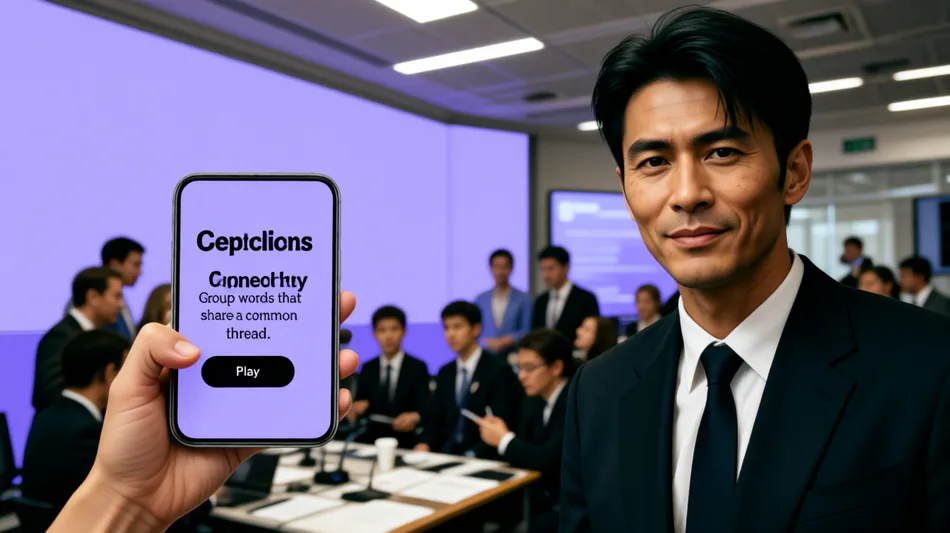
NYT Connections Answers for Friday, November 13 (Game #1251)

 London
 3 °C

 Manchester
-1 °C
 Glasgow
 4 °C
 Dublin
3 °C
 Belfast
5 °C
 Washington
 14 °C
 Denver
16 °C
 Atlanta
12 °C
 Dallas
21 °C
 Houston Texas
23 °C
 New Orleans
21 °C
 El Paso
20 °C
 Phoenix
 28 °C
 Los Angeles
21 °C
San Diego
23 °C
San Francisco
19 °C
Chicago
5 °C
Minneapolis
1 °C
Seattle
 14 °C
Portland
13 °C
Salt Lake City
13 °C
Las Vegas
23 °C
Miami
25 °C
Jacksonville
22 °C
San Antonio
20 °C
Bermuda
24 °C
Nassau
 10 °C
Iqaluit
-5 °C
Yellowknife
2 °C
Anchorage
 3 °C
Fairbanks
 -8 °C
Barrow
-11 °C
Calgary
12 °C
Edmonton
9 °C
Winnipeg
-2 °C
Goose Bay
4 °C
Halifax
11 °C
Boston
8 °C
Ottawa
3 °C
Toronto
 4 °C
Detroit
7 °C
Cleveland
7 °C
New York
9 °C
Baltimore
14 °C
Philadelphia
11 °C
Nuuk (Godthåb)
2 °C
Hong Kong
24 °C
Singapore
28 °C
Melbourne
22 °C
Canberra
22 °C
Adelaide
 16 °C
Darwin
 31 °C
Perth
21 °C
Fort Worth
21 °C
Honolulu
27 °C
Sydney
23 °C
Johannesburg
17 °C
Dubai
27 °C
Mumbai
27 °C
Zürich
6 °C
Tokyo
13 °C
Seoul
10 °C
Delhi
18 °C
Beijing
-1 °C
Riyadh
13 °C
Prague
5 °C
Pennsylvania
10 °C
Valletta
24 °C
Manama
21 °C
Warsaw
5 °C
Stockholm
3 °C
The New York Times released its daily Connections puzzle, game #1251, on Friday, November 13. The word game challenges players to group words into four distinct categories of increasing difficulty, with today’s solution involving terms related to media attention and items that are towed.
The New York Times published its daily Connections puzzle, designated as game #1251, on Friday, November 13. The word-based challenge requires players to identify four groups of four words that share a common thread, with each group assigned a specific difficulty level ranging from green for easy to purple for very difficult.
The solution to the day’s puzzle included categories such as "Media Attention" and "Things That Are Towed." The game is available for free on the NYT Games website and mobile applications, allowing users to make up to four mistakes before being required to solve the final group by elimination.
In a commentary accompanying the release, journalist Johnny highlighted the deceptive nature of the puzzle’s design. He noted that players often fall for misleading connections, such as grouping words based on superficial similarities rather than their intended thematic links.
"I made some really bad groups today," the commentator wrote. "First, I connected SURF, WAVES, FREEZE and BARGE, thinking that water was the link. Then I saw a thread between SCROLL, TRAILER, TEASER and PRESS, which I thought was something vaguely to do with online advertising."
The commentator explained that recognizing the correct categories required looking beyond these initial traps. He noted that he eventually identified the four terms connected to "Media Attention" after realizing he had overlooked them. The remaining words were grouped as "Things That Are Towed," which included the word WAVES, a term that initially appeared to fit the water-related category but was part of the towing group.
Connections is one of several popular word games produced by the New York Times. It differs from simpler games like Wordle by incorporating more complex linguistic tricks, such as homophones and double meanings, which can disguise the answers. The game’s structure provides players with breathing room through the allowance of multiple errors, though the increasing difficulty levels demand careful analysis.
The puzzle appears at midnight in each user’s local time zone, meaning that the "daily" game varies depending on geographic location. For those seeking assistance, hints and full answers are typically provided alongside commentary on the strategies used to solve the specific day’s grid.
L.Ziegler--BlnAP